24-WeekUX/UI Bootcamp: The Curriculum, From 0 to 1
How I built a 24-week UX/UI bootcamp for career changers around the learner's journey, then helped it grow from one university to 25+ institutions across 3 countries.
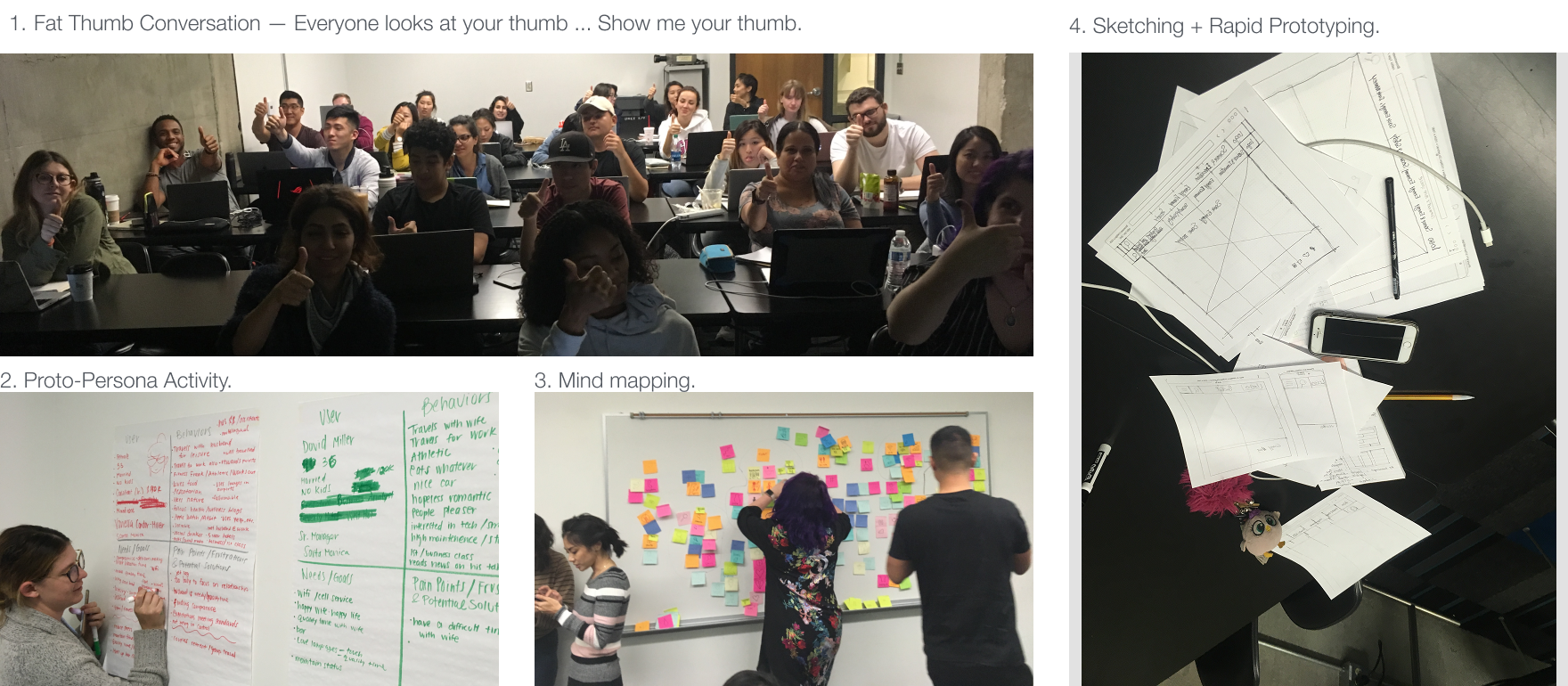
The short version
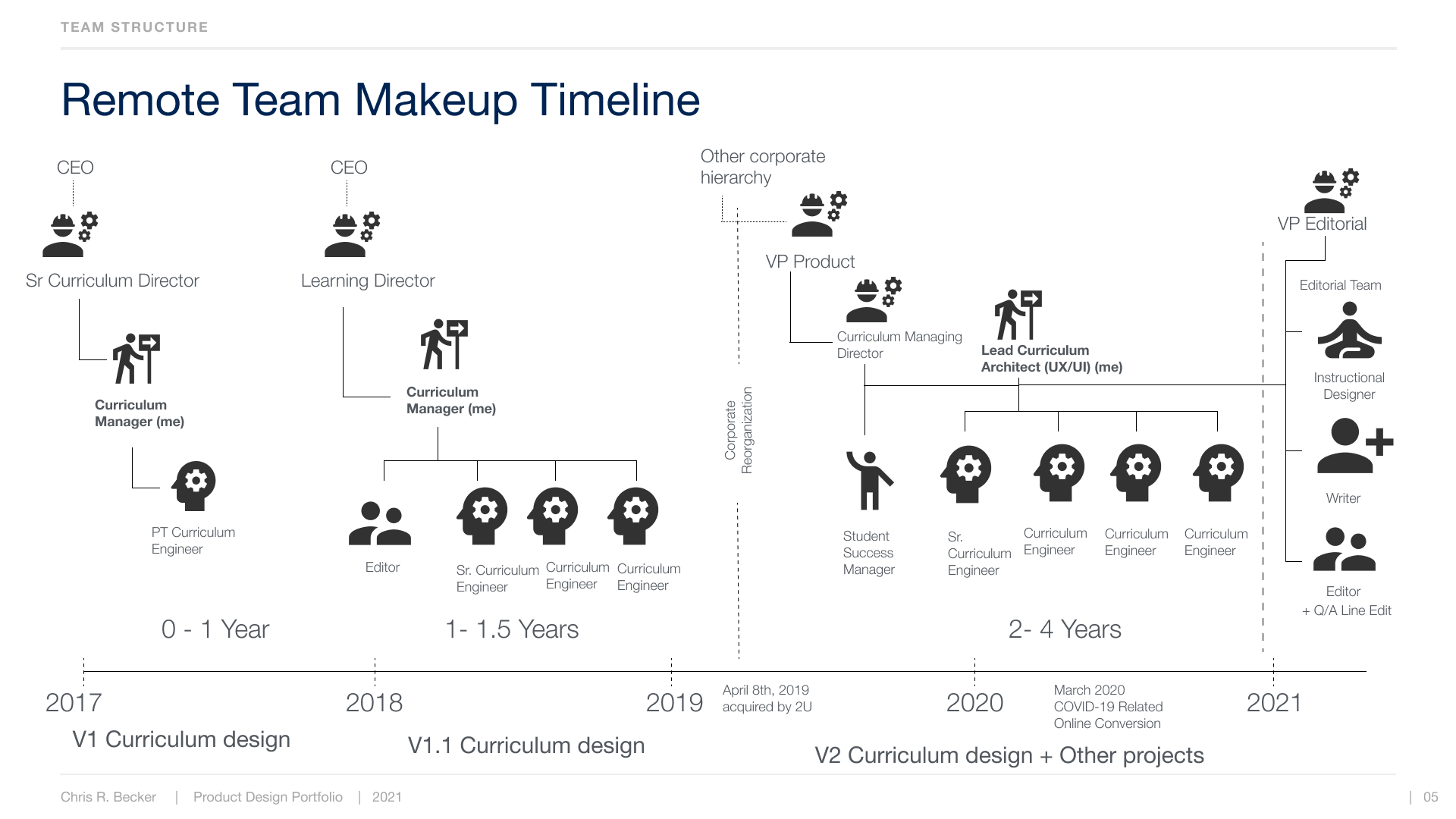
I took the Trilogy Education Services UX/UI Bootcamp from nothing to a working 24-week program in about seven months, taught the first cohort myself at UC Irvine, and kept improving it as it spread. It grew from one university to eight in its first year and a half. After acquisition by 2U it grew to 25+ institutions in 3 countries (USA, Canada, and Australia) over four years.
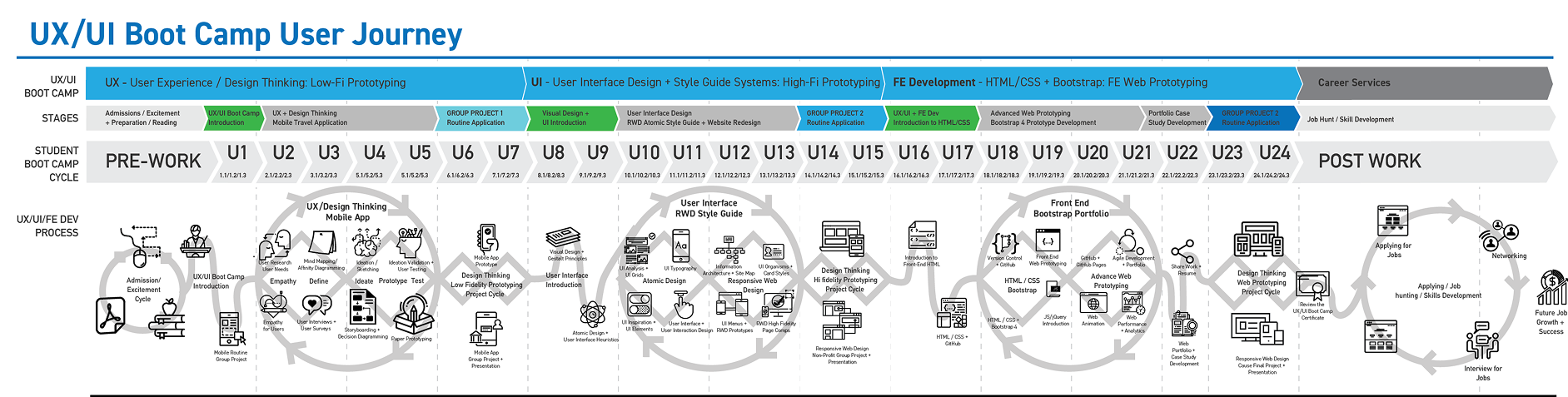
The program was built for career changers, so it had to take someone with no design background to a portfolio they could take to an interview. I did that by treating the curriculum as a journey: a clear starting point, three stages that build on each other, and real work to show at the end.
- ~7 moto take it from 0 to 1
- 1 → 8universities in the first 1.5 years
- 25+institutions over 4+ years
The challenge was that design education kept teaching one narrow slice of the job. I wanted students to leave able to research, design, and build.
The Ordinary World
Where the learners start
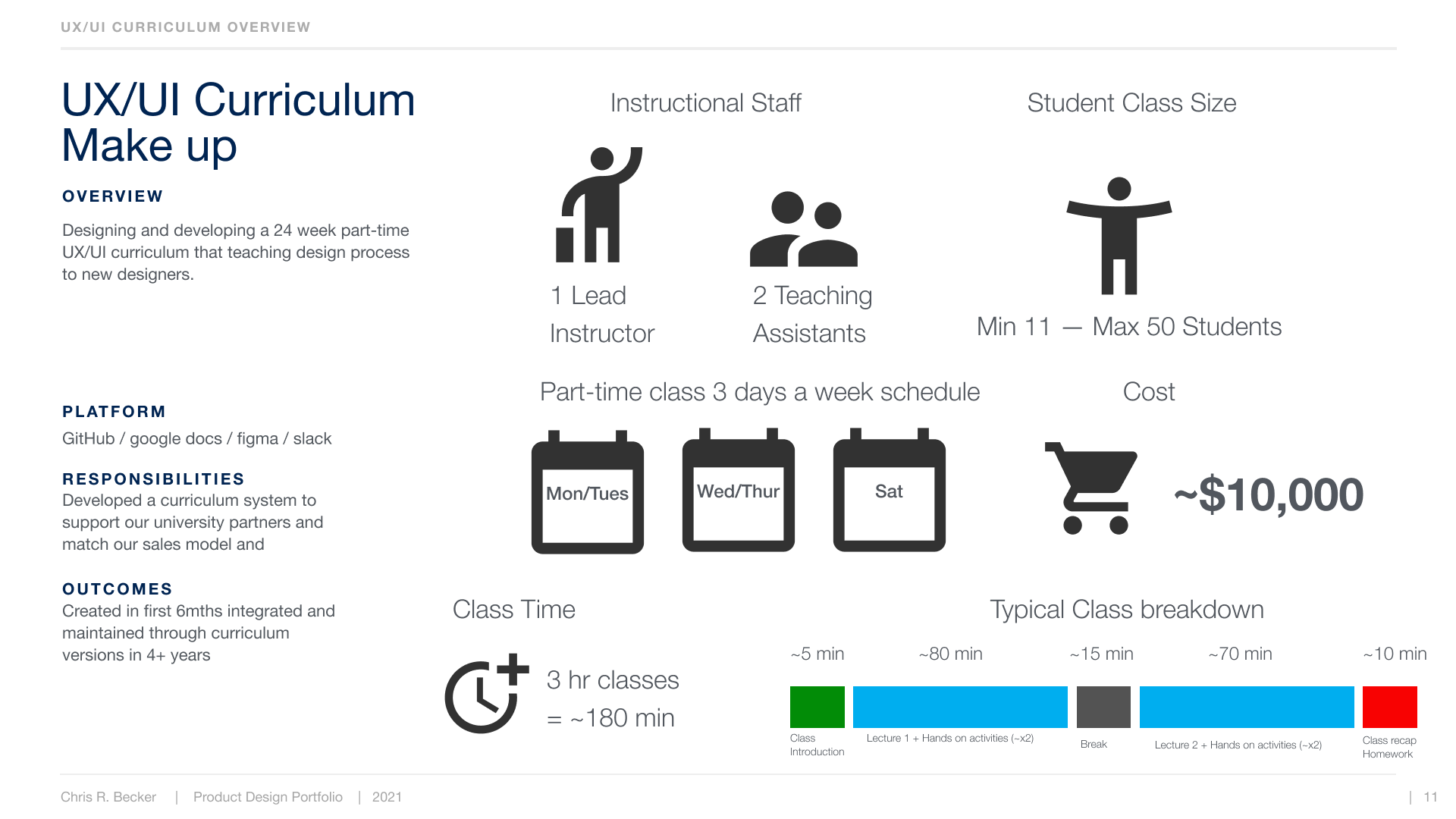
Most learners were adults continuing their education or changing careers. They were teachers, marketers, analysts, and people who had been told design wasn't for them. They had jobs and families, so the program met on Monday and Wednesday evenings and on Saturdays, three hours at a time.
That starting point shaped every decision. Time was short, backgrounds were uneven, and the stakes were high. A learner who fell behind in week three often never caught up. I designed for that learner first.
The Call to Adventure
A curriculum that was too narrow
Trilogy partnered with universities to run skills-based programs that were university-run, student-tested, and employer-approved. The UX/UI bootcamp didn't exist yet, and the options elsewhere were thin. Students were being taught a narrow slice of the job: some visual design, or some coding, but not how a design decision gets made and then built.
I was asked to conceive and develop the whole curriculum. My answer was a path that covered the full spectrum, so a graduate could handle research, interface design, and front-end development, and know how they fit together.
Crossing the Threshold
Three stages in 24 weeks
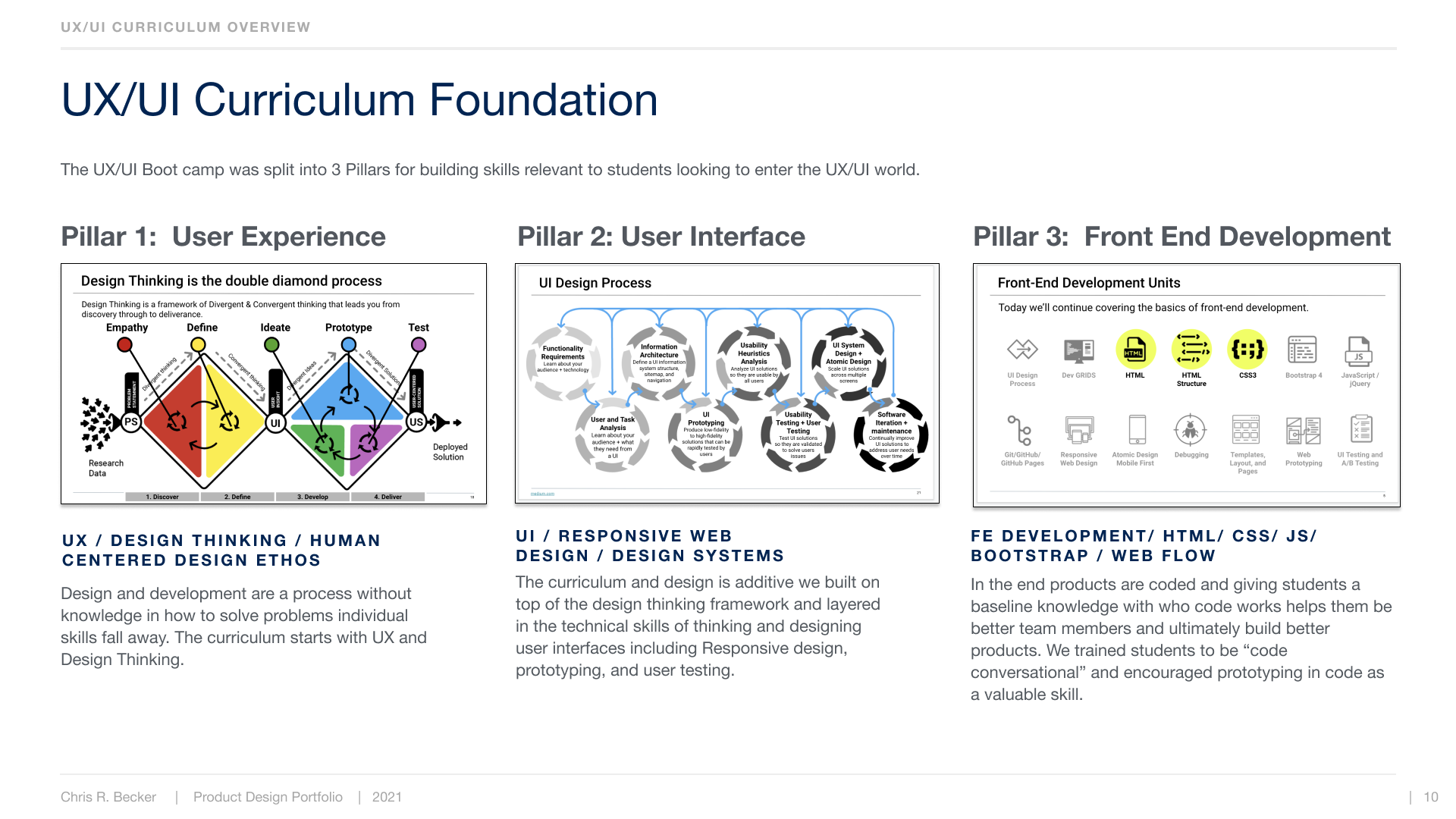
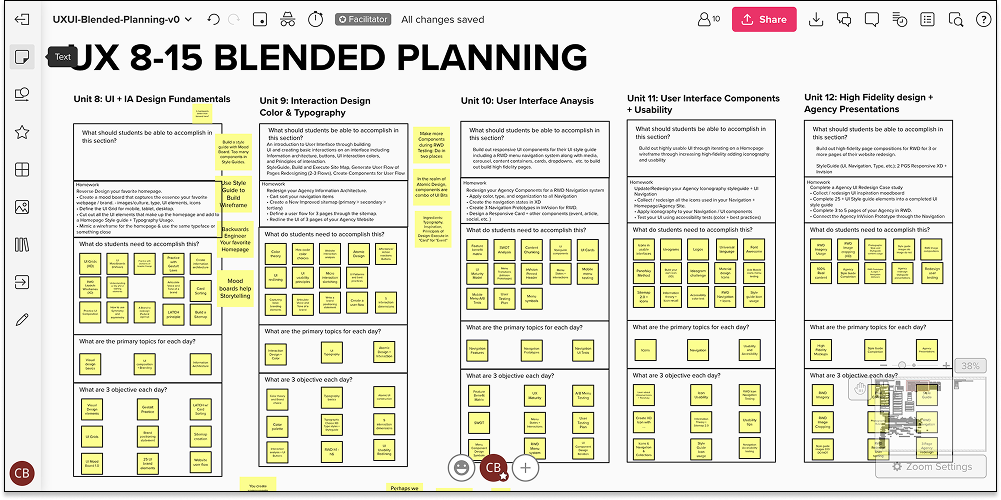
I worked backward from what a junior designer needed to be able to do and split the 24 weeks into three stages of eight weeks each. Each stage ended with something learners could put in a portfolio.
Weeks 1 to 8: UX
- Design thinking
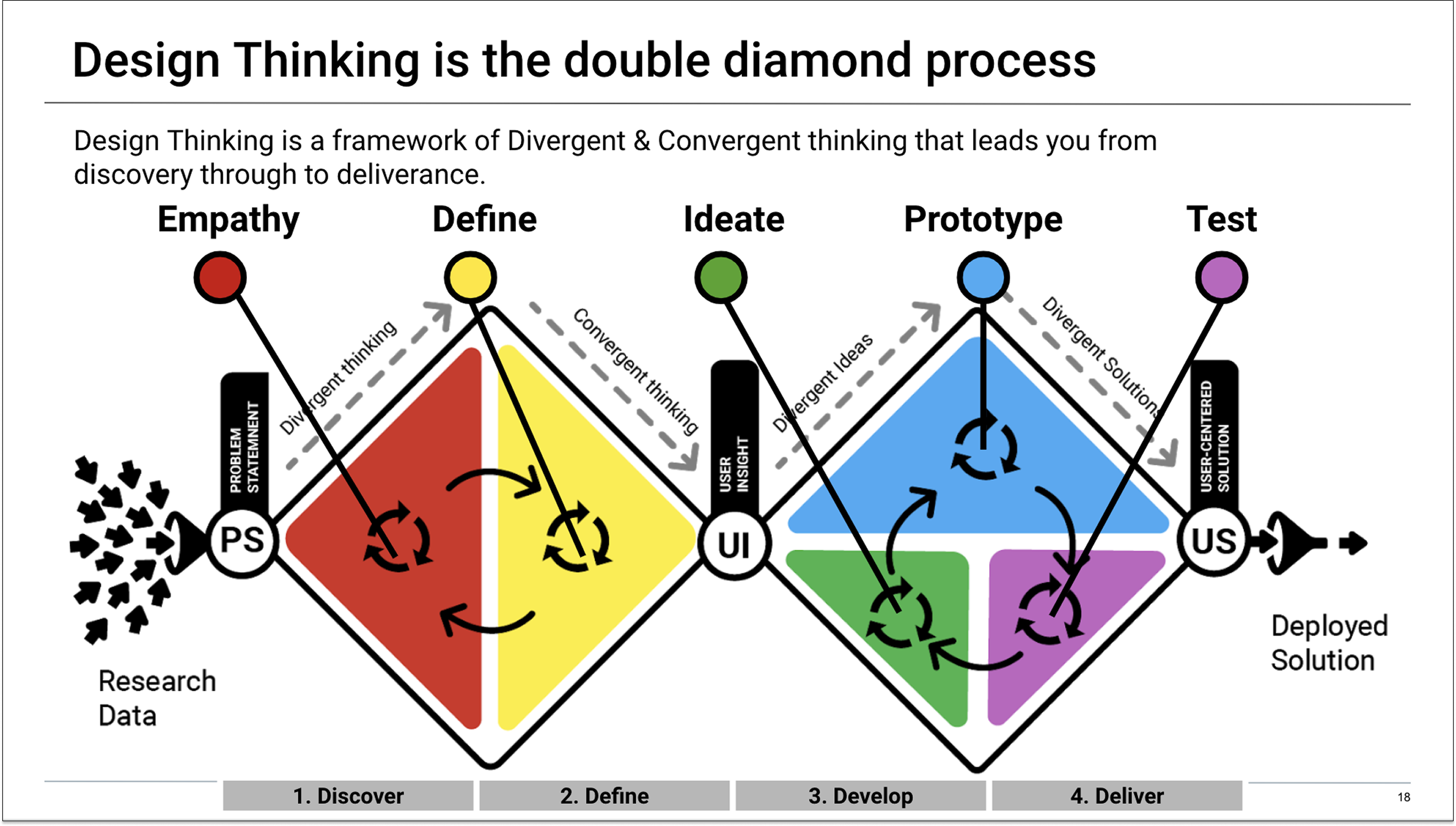
- User research and interviews
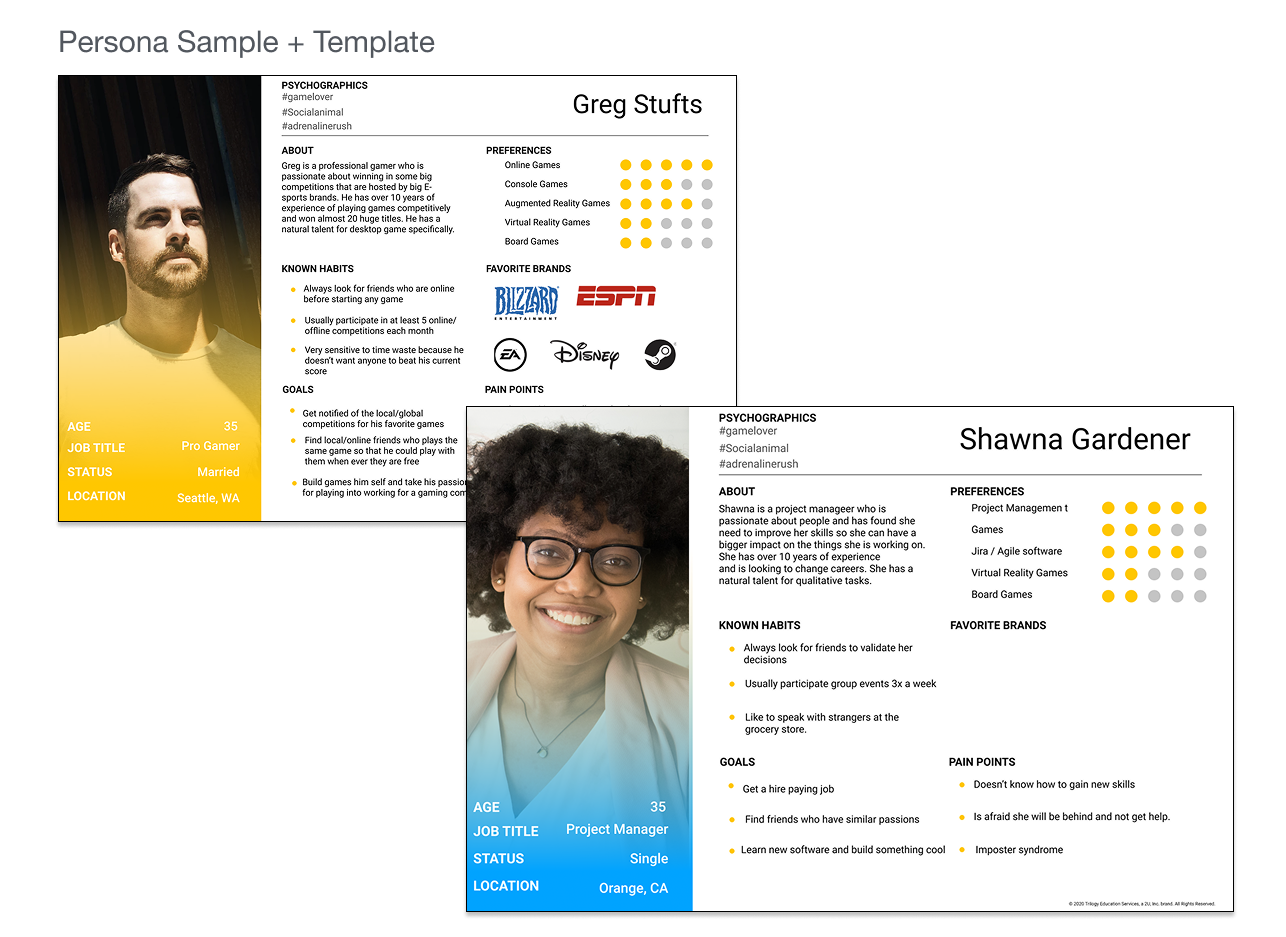
- Personas and journey maps
- Wireframes and usability testing
Weeks 9 to 16: UI
- Visual design: type, color, layout
- Design systems basics
- Prototyping in Adobe XD and Figma
- Handoff to developers
Weeks 17 to 24: Front-end
- HTML/CSS
- JavaScript basics
- Responsive layouts
- Shipping their own design
Across all 24 weeks
- Critique and feedback habits
- Real projects, not exercises
- A finished portfolio
Tests, Allies, and Enemies
Building it, and teaching it first
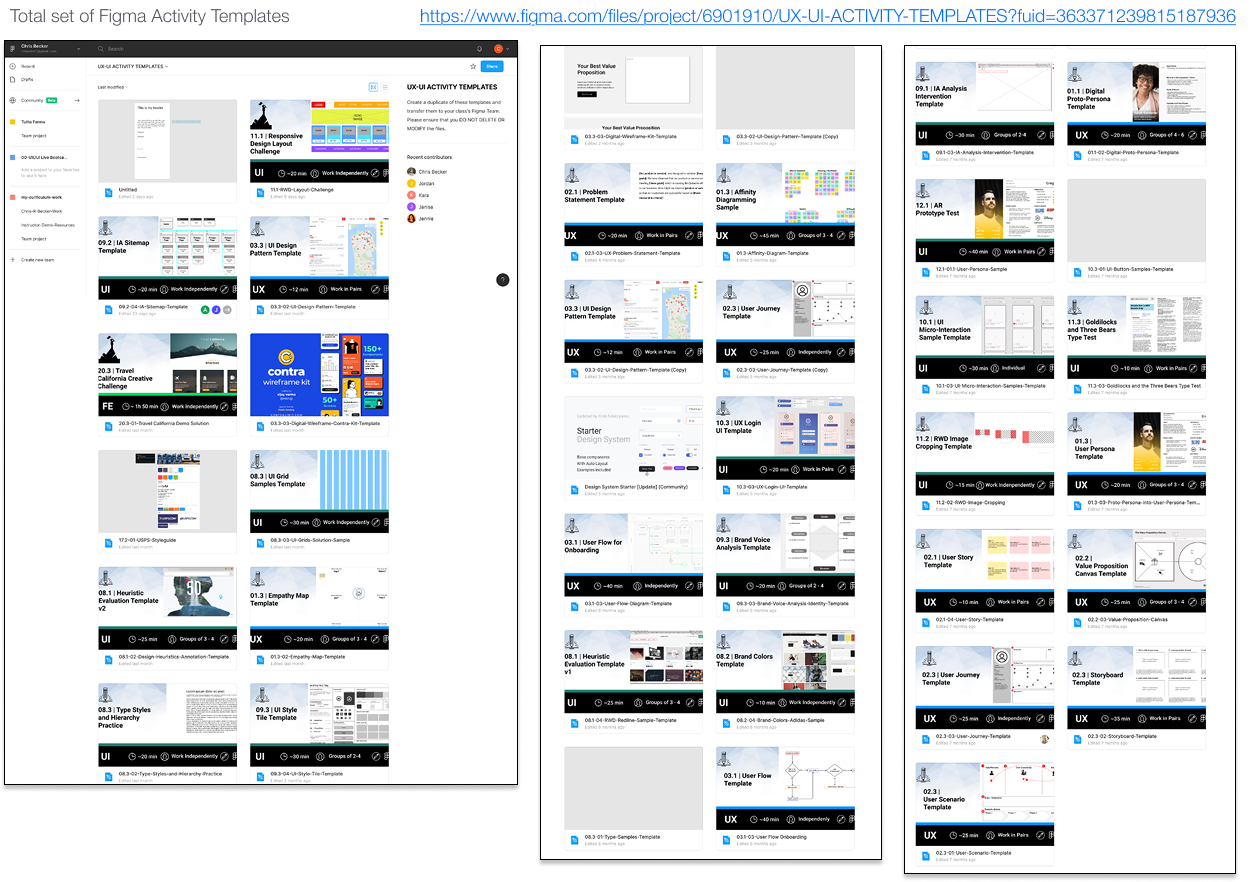
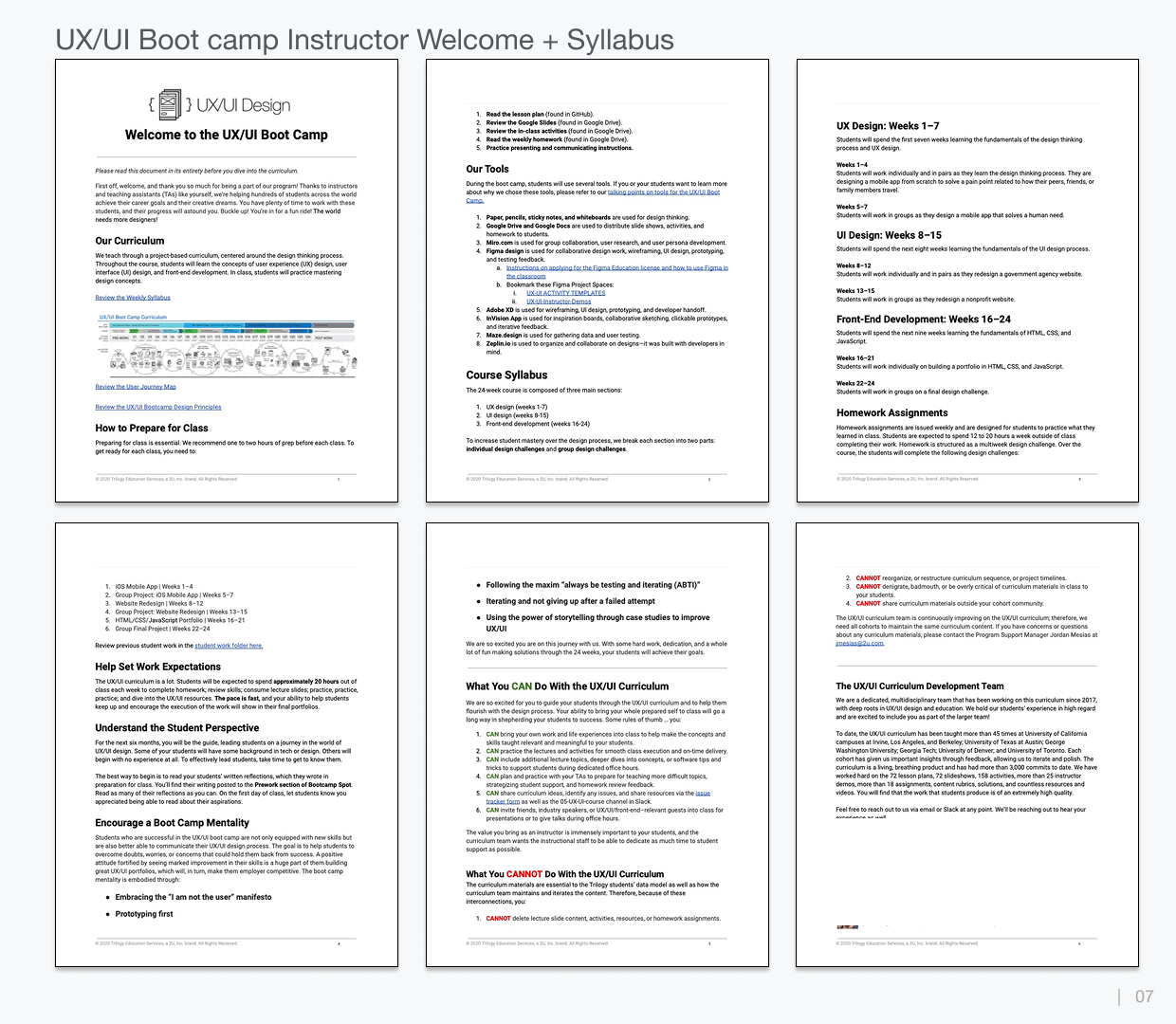
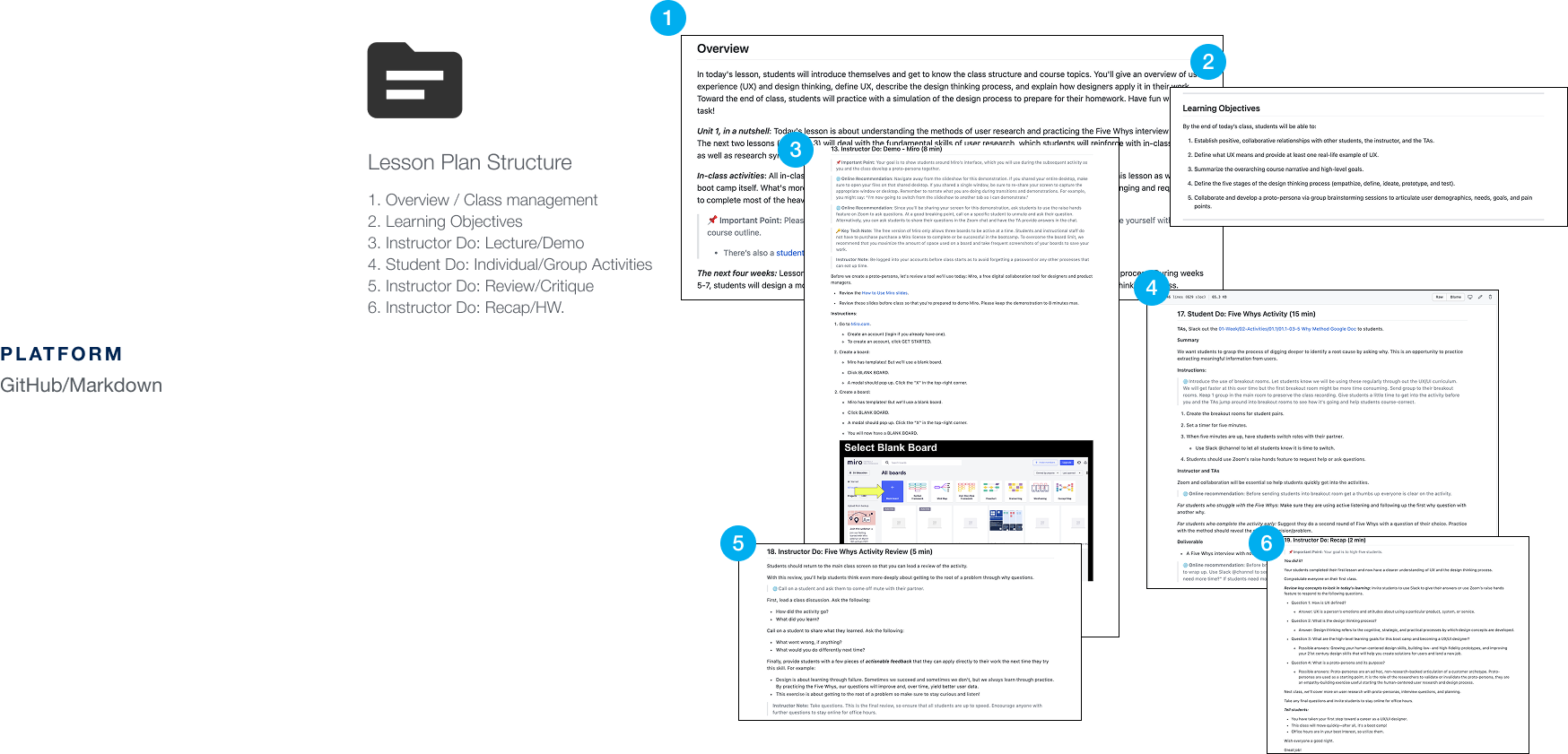
I owned the curriculum architecture and built the materials: lectures, slide decks, assignments, projects, and detailed lesson plans for instructors and university partners. I started with a small team of two curriculum designers and one front-end engineer, and later co-managed a team of about ten that included learning designers, editors, visual designers, and QA.
Then I taught the first cohort at UC Irvine in 2017. That gave me what no planning could: I saw which lessons landed and which ones fell flat, and I rewrote them before anyone else had to teach them.
My allies were the instructors, the partner universities, and the learners who told me the truth. The enemies were the clock, uneven backgrounds, and a tool landscape that kept moving, with Adobe XD and Figma arriving mid-stream.
The Ordeal
Writing for teachers who aren't teachers
The hardest problem wasn't the content. It was who would deliver it. The instructors were working professionals, designers and developers with real jobs, not career teachers. The materials I wrote for my own teaching style didn't work for them.
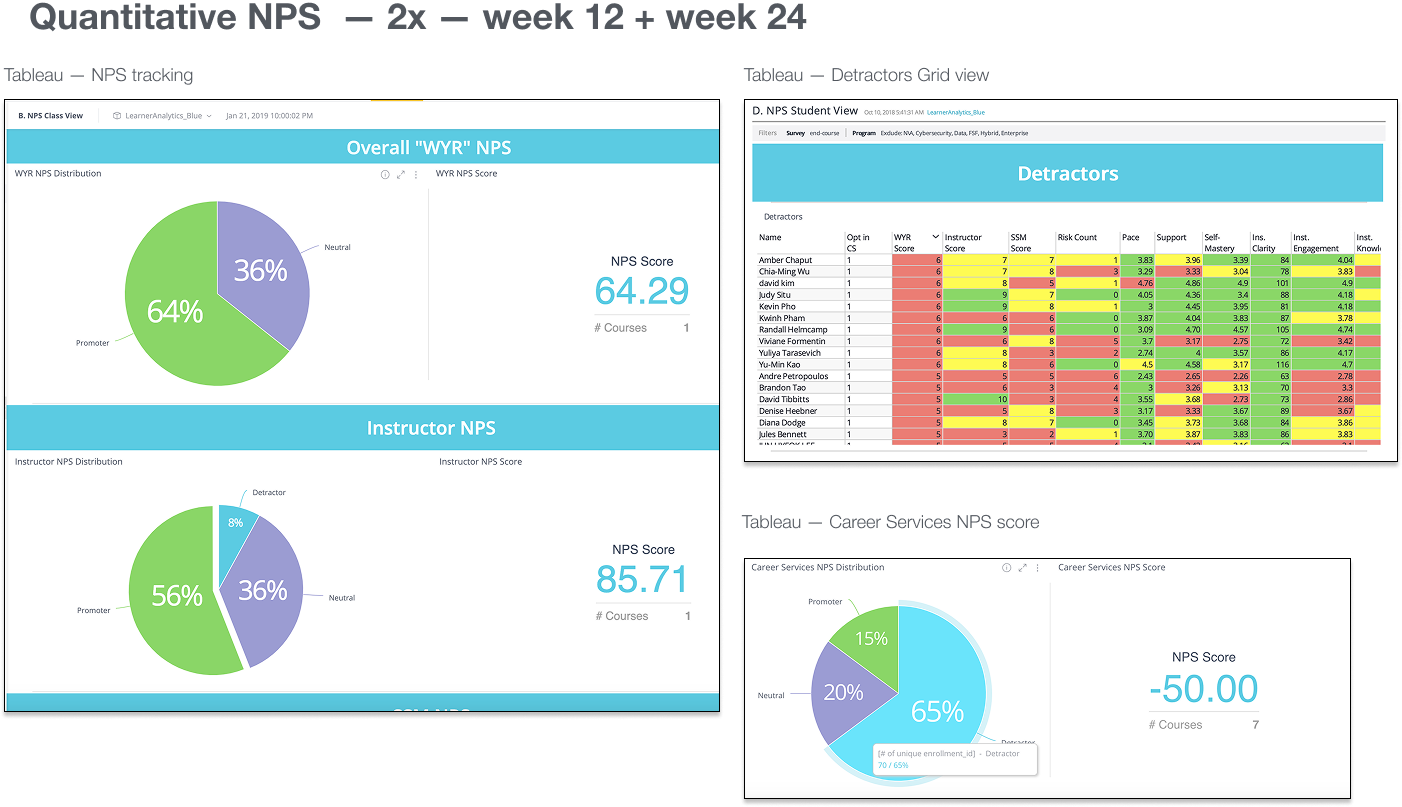
I also learned that a good curriculum doesn't survive on instinct. I had to measure it, and the main signal I had was NPS. That was risky, because a score can say a class is struggling without saying why.
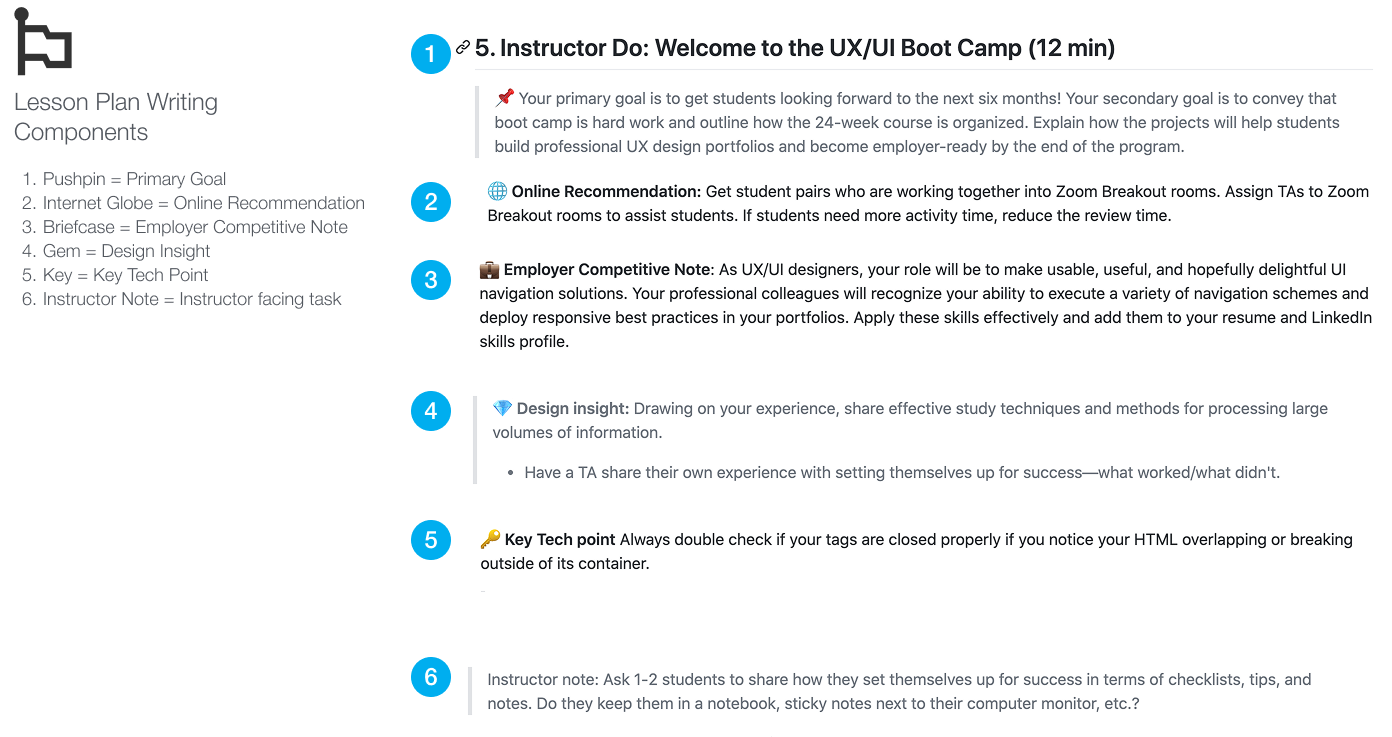
So I rebuilt the materials for the people who would really use them. Lesson plans became clearer and more complete, with the reasoning written in. A new instructor could pick one up the night before and teach it well.
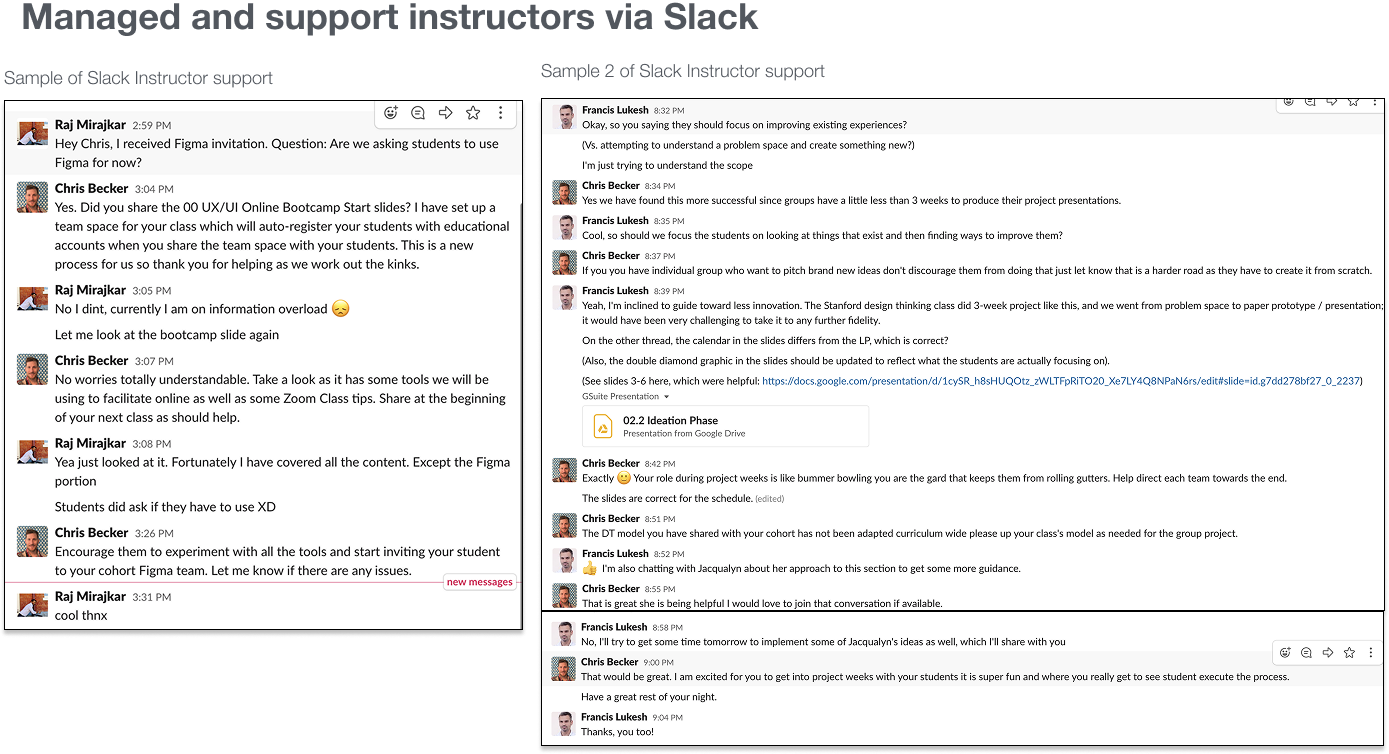
Then COVID hit. 2020 through everything at us. Our bootcamp curriculum was designed for in-person instruction, but we didn't have a choice we had to pivot to remote learning.
I learned that adapting to new circumstances requires tons of flexibility and a deep understanding of your audience. Our teachers became more reliant on the us as support systems as we rapidly updated for the new reality.
We retooled the materials rapidly to fit the new reality. A lot of things broke and adapting in-person activities to Zoom sessions became a challenge.
New management at 2U tinkered with the approach, and I stepped away to pursue other opportunities.
The Reward
Skills that held up
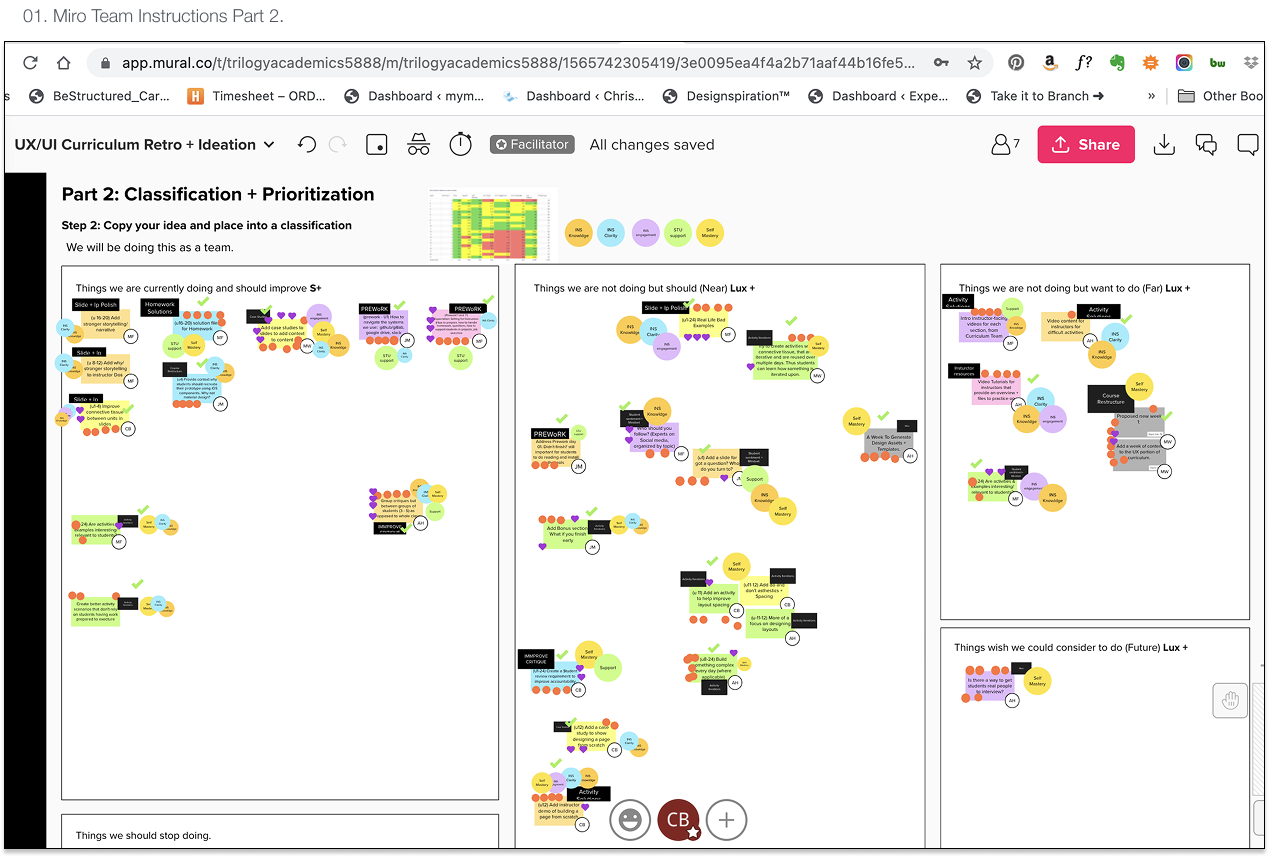
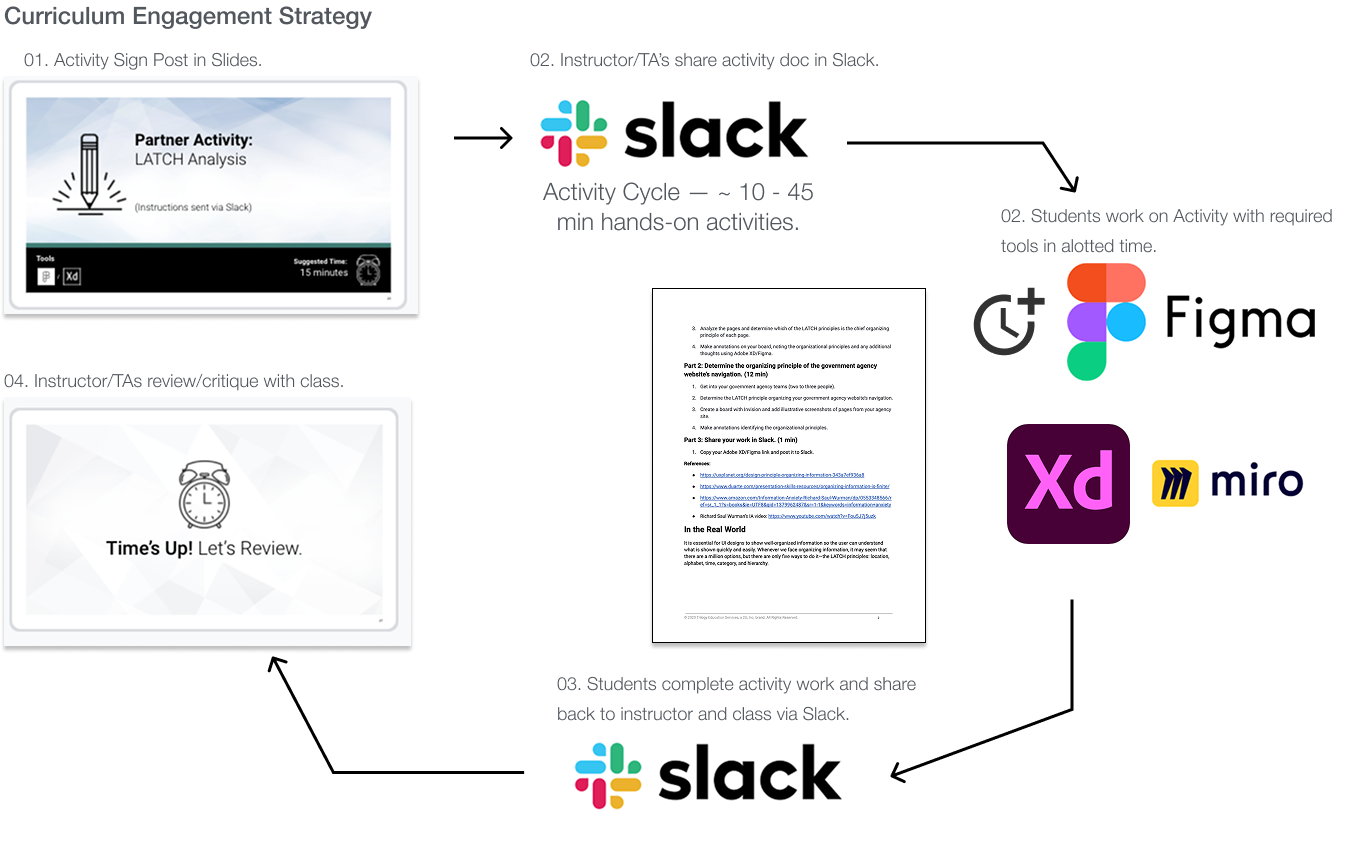
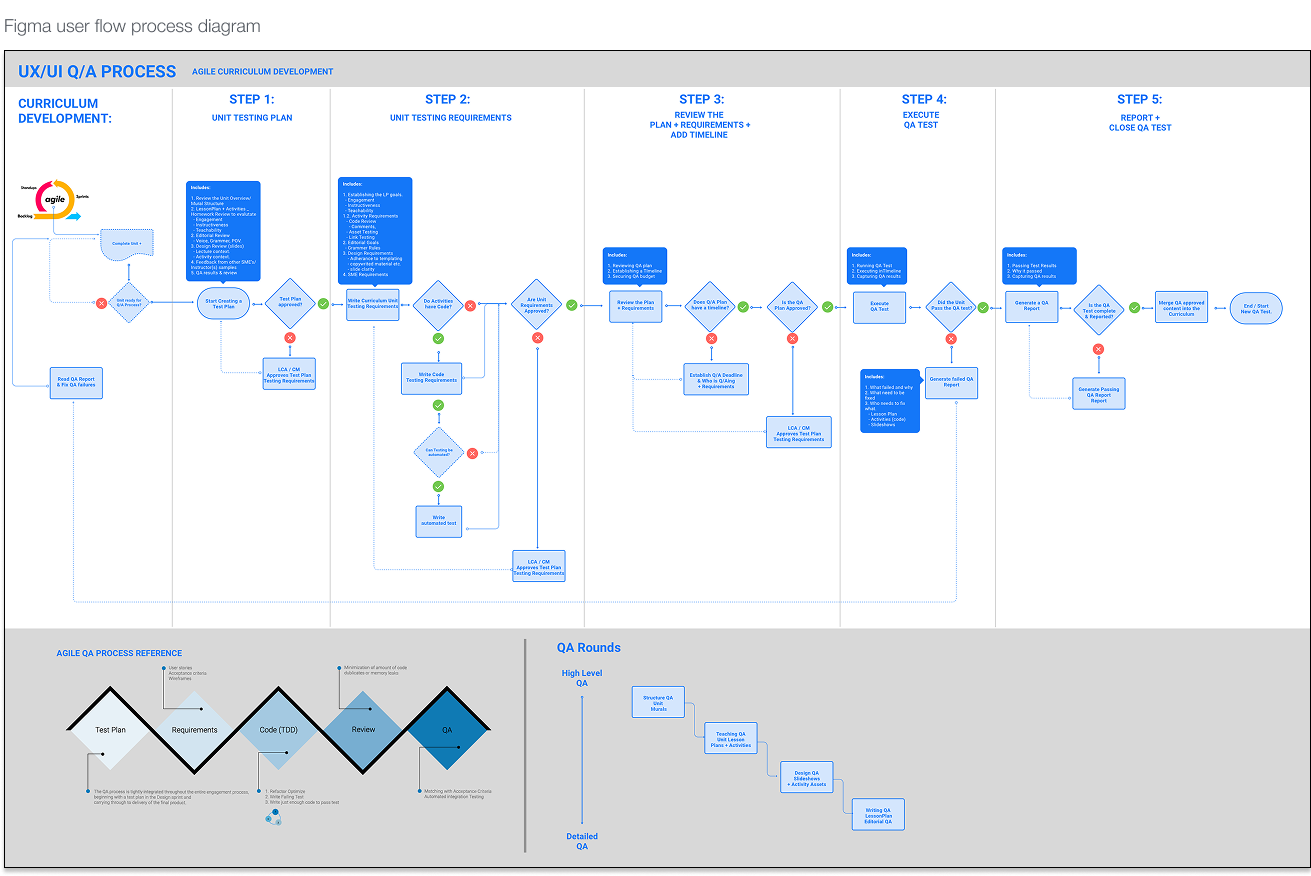
We kept a simple loop running: NPS, student feedback, and the assignments and projects learners handed in. Together these feedback pieces told me whether students were actually acquiring skills, and where. When a module scored low or deliverables came in weak, we tweaked the module.
The results showed in the work. Learners finished with portfolio projects that covered research, interface design, and working code. I provided leadership within the organization and external partners on all matters related to UX/UI. Sustained 3x to 4x growth moving the product from 1 million in 2018 to 13 million in 2020.
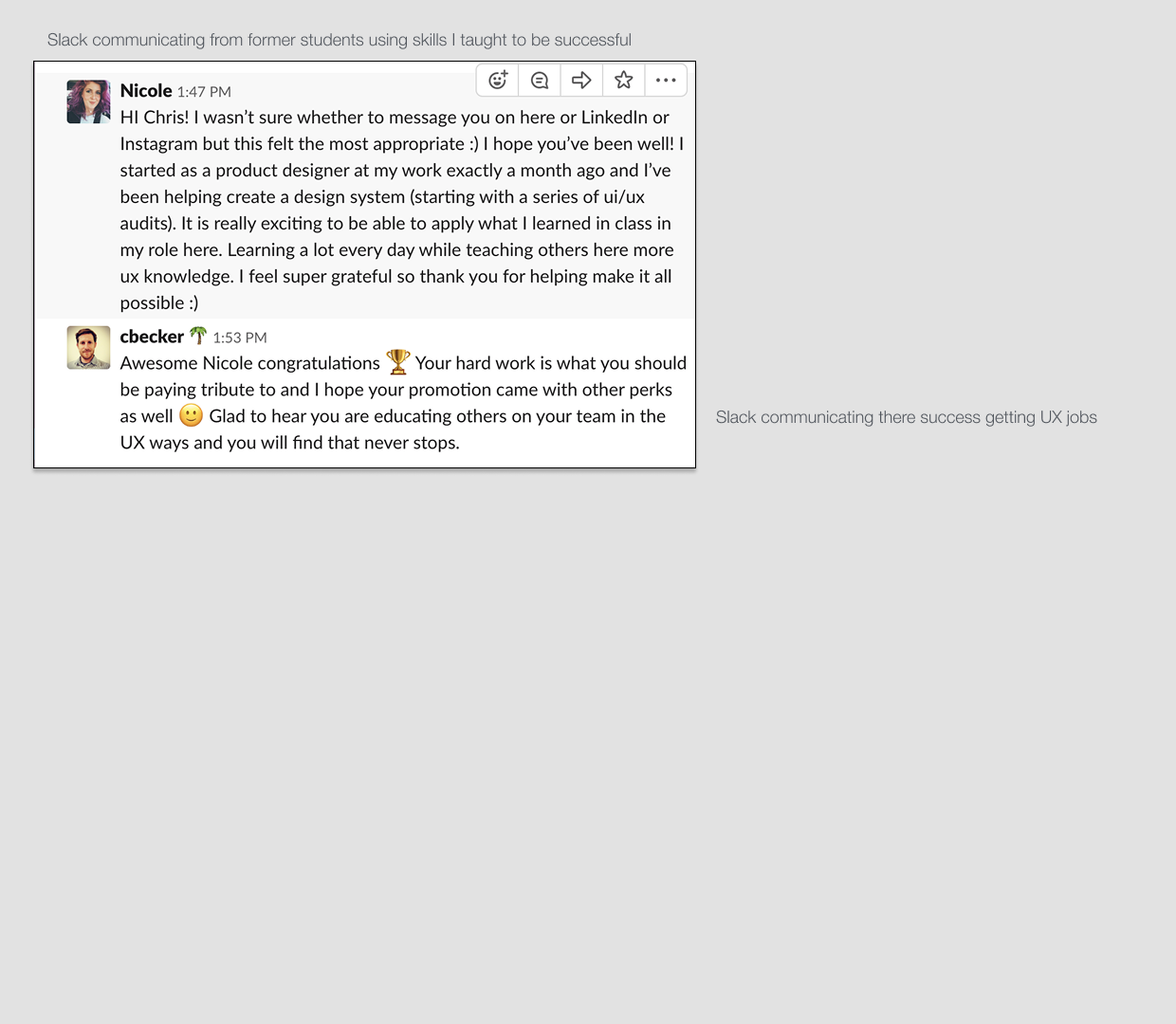
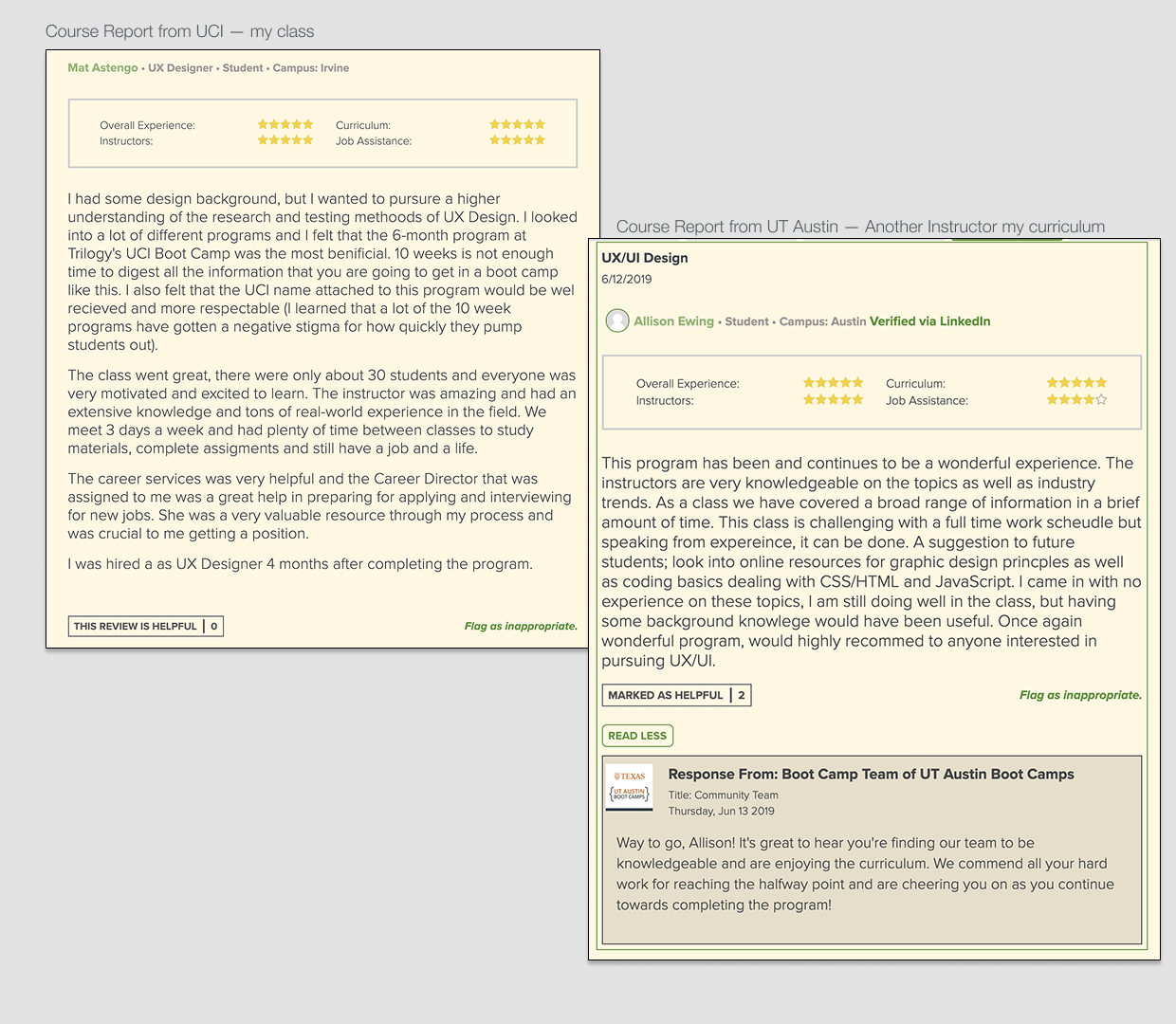
“[Student or partner quote placeholder.]”Name, role
The Road Back
Scaling it without breaking it
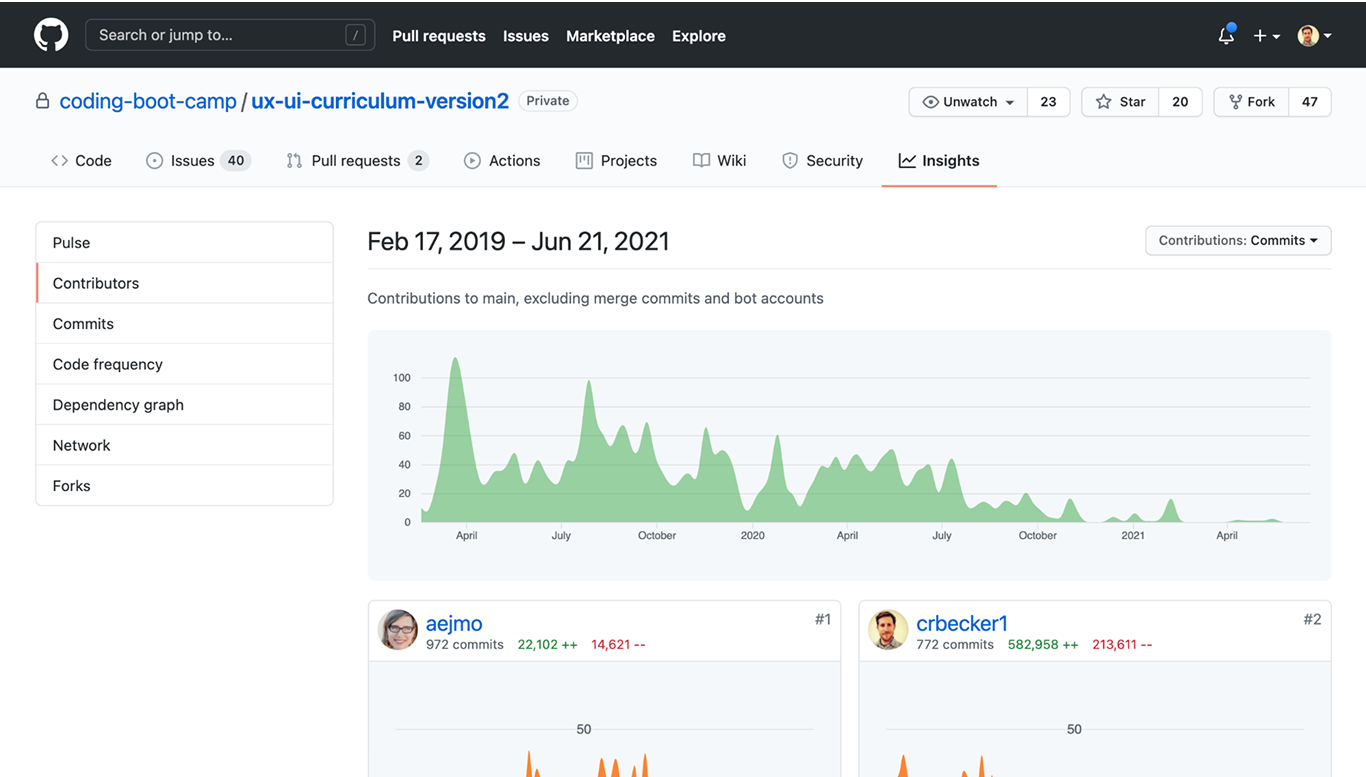
Once the program worked, the job became keeping it good while it grew. I iterated the curriculum, trained instructors, and gave senior guidance to junior developers through training and code reviews. I also kept the content current as tools changed.
The scale caught the industry's attention. In April 2019, 2U announced it was acquiring Trilogy Education Services for $750 million, at a time when Trilogy had served about 20,000 learners across 120 programs. UX/UI was one of the programs it ran, alongside coding, data analytics, and cybersecurity. The bootcamp moved from a start-up to a product inside a public company, and it had to hold up at that size.
The program ran at UCLA, UC Irvine, UC Berkeley, George Washington University, Georgia Tech, UT Austin, the University of Denver, the University of Minnesota, and many more, across the United States, Canada, and Australia.
I later carried the approach into a 16-week semester UX/UI program with Netflix and Norfolk State University, an HBCU, led by a small team of five. Its aim was to improve access to tech for people of color.
- 1 → 8universities in 1.5 years
- 25+institutions in total
- 3countries it was taught in
Return with the Elixir
What came back with me
The curriculum was the product, and it carried the company's growth. [Add the business result: the UX/UI bootcamp's growth after the 2U acquisition, with a number you can stand behind.] It also left behind the part that mattered most to me: a way to build and share lessons that other people could teach well.
What I took from it
Teach the first cohort yourself. Nothing exposes a weak lesson faster than standing in front of it.
Design for the person who will use it. A lesson plan is a product, and the instructor is the user.
Measure skill, not just satisfaction. NPS told me how people felt. Their work told me what they could do.
What I'd do differently. [Add one honest reflection.]
Where it landed
I built a UX/UI program from nothing, taught it first, and helped it reach 25 institutions.
As a Sr. UX Design Curriculum Architect, my work was to turn what a good designer knows into a path other people could teach and learners could finish. Treating the curriculum as a journey, with the learner at the center and the instructor as a user, is what let it scale.
The lesson I carry is simple. The best learning design is tested on real people, measured honestly, and rewritten until it works for the people who have to deliver it.