← More work

Project highlight

LADWP Design Thinking Workshop

A hands-on workshop that gave LADWP employees a working knowledge of design thinking, and the chance to practice it on real problems.
  • Design Thinking
  • Workshop
  • Ideation
  • Facilitation
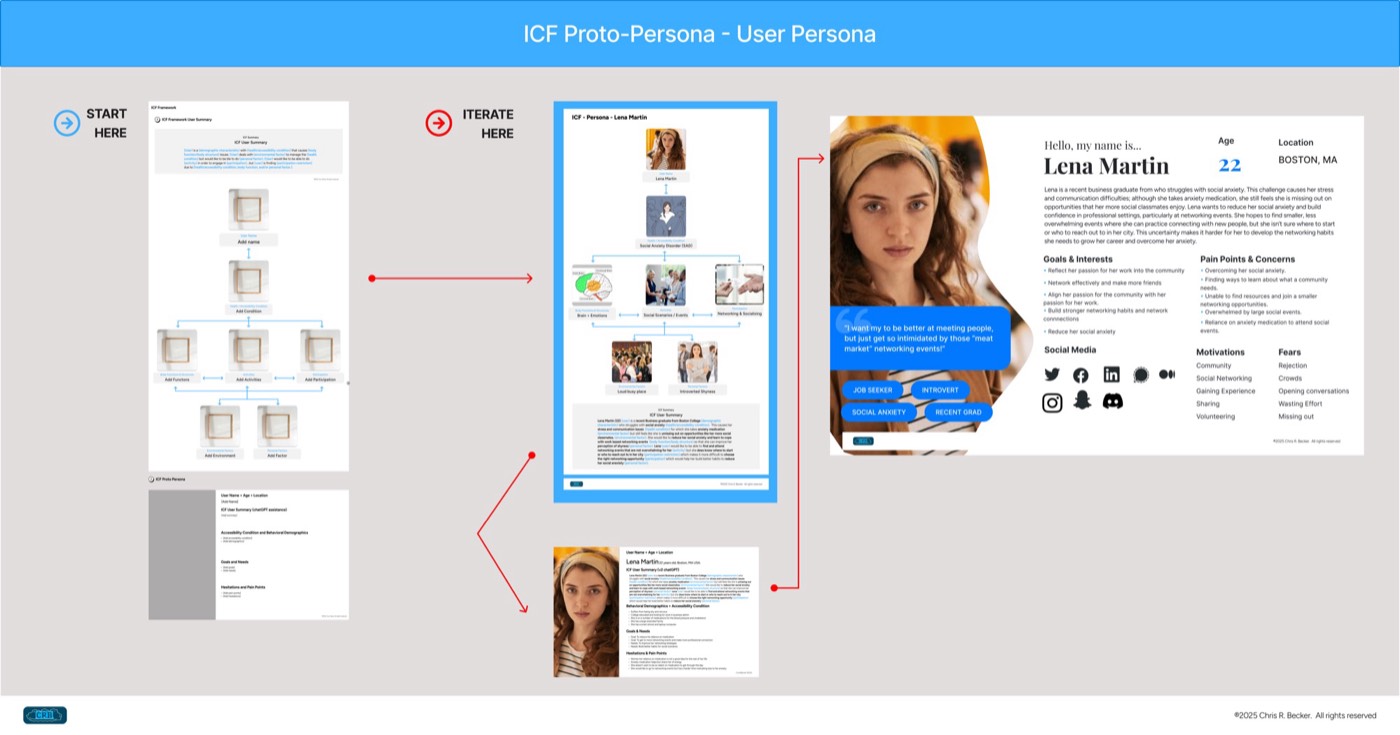
A proto-persona and user persona template from the workshop, on a Figma board
My role
Workshop architect and lead facilitator
With Enterprise U
Client
LADWP
Employee workshop
Format
2x 3 hr workshops
22 LADWP employees / 5 teams of 4-5
When
May 7 and May 14, 2026
Part 1 and Part 2

The quick version

LADWP wanted its employees to get familiar with design thinking and practice it, not just hear about it. I architected the whole workshop, the activities and the lectures, and led it as facilitator. Enterprise U worked with the client and handled scheduling with LADWP.

Twenty-two LADWP employees took part over two sessions, on May 7 and May 14. The teams all work on billing support and accessibility initiatives, so they practiced design thinking on challenges from their own work.

Day 1

Empathy + Define

Teams started with people. They drew proto-personas, mapped the person’s day, and narrowed what they heard into a design challenge.

Part 1 slides

The workshop deck for day one, in Figma.

Open in Figma


Day 1 outcomes

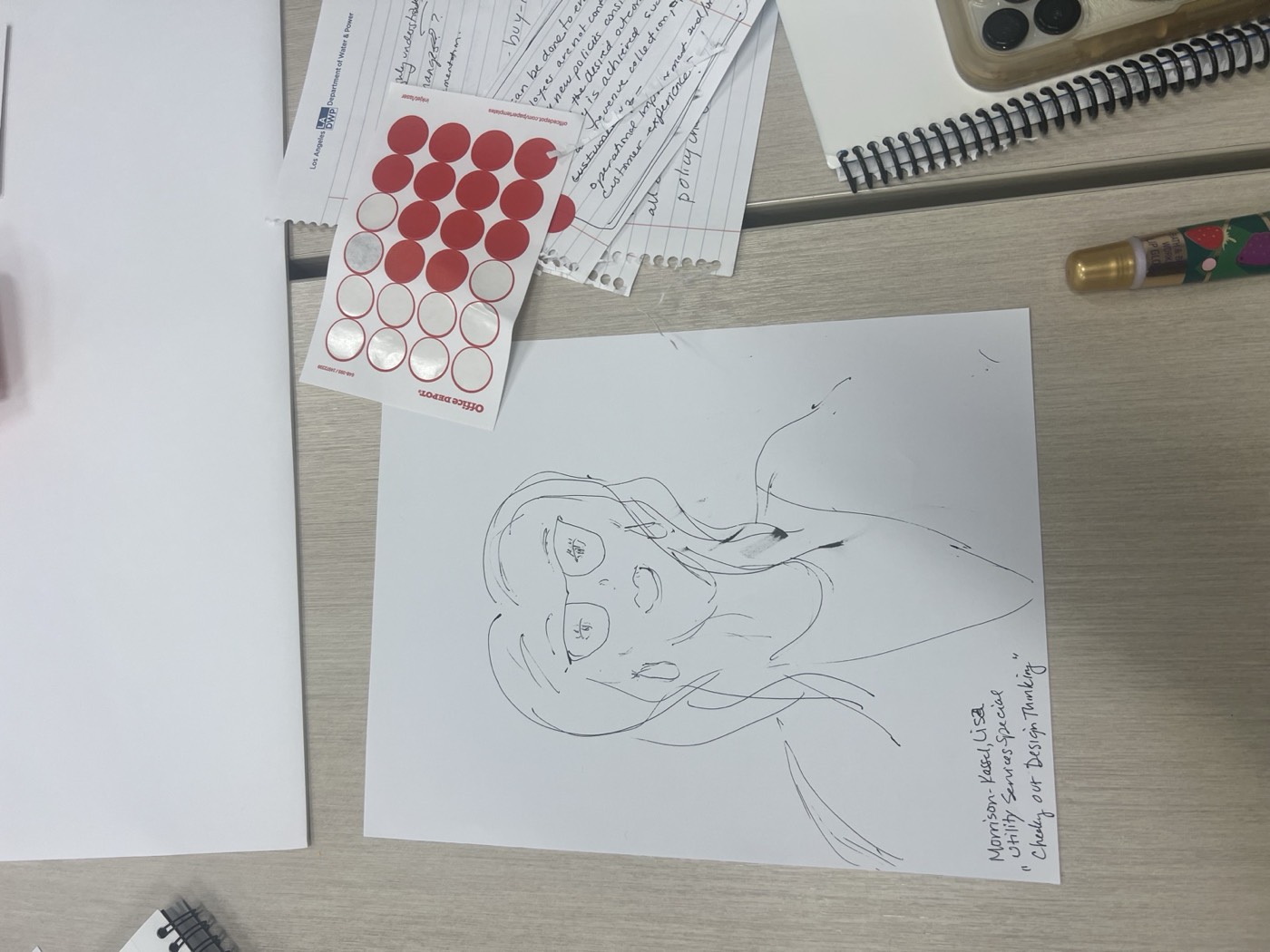
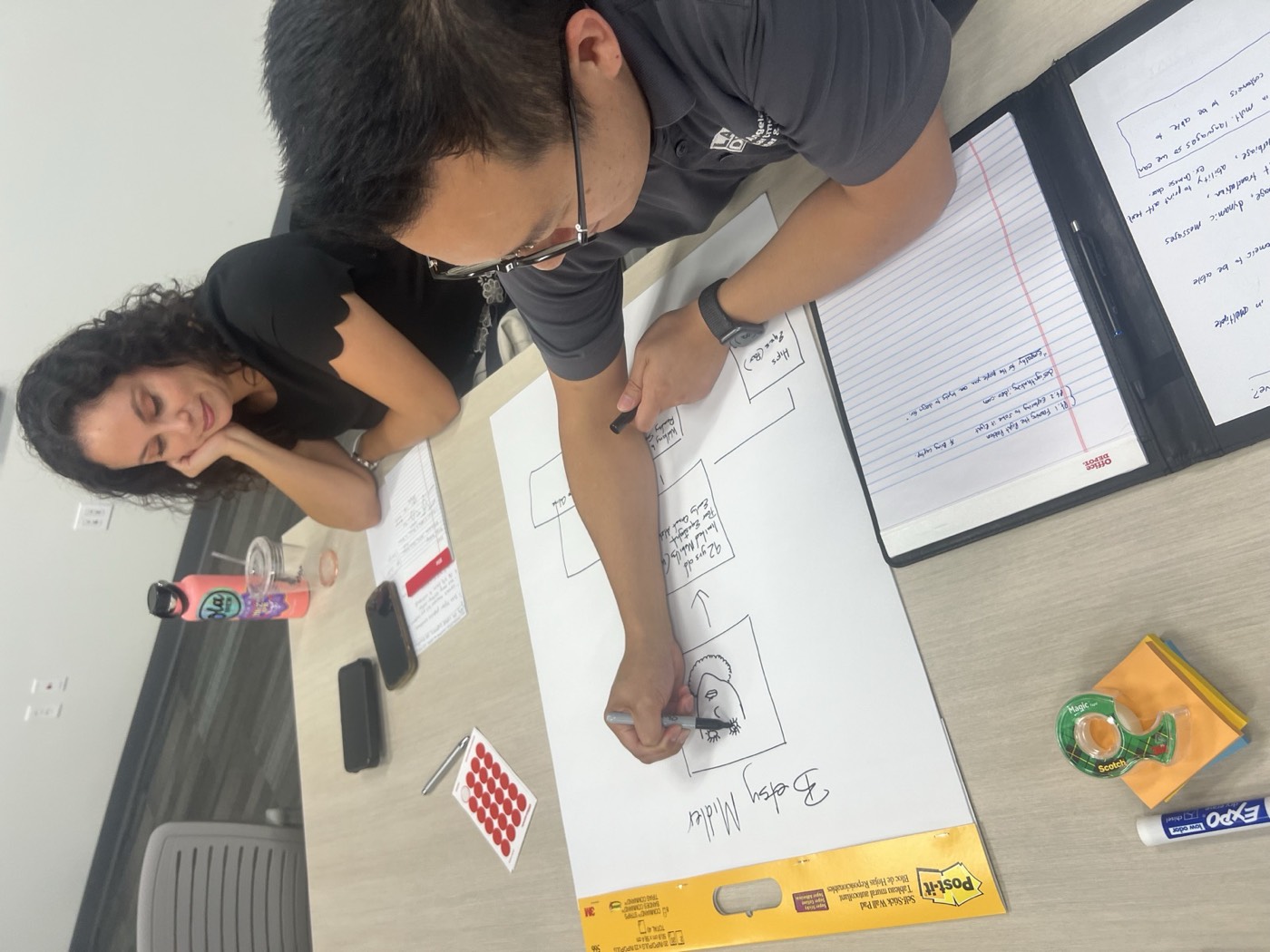
A hand-drawn portrait of a person with glasses on a sheet of paper
Meet the person. Participants sketched a portrait of the person they were designing for.
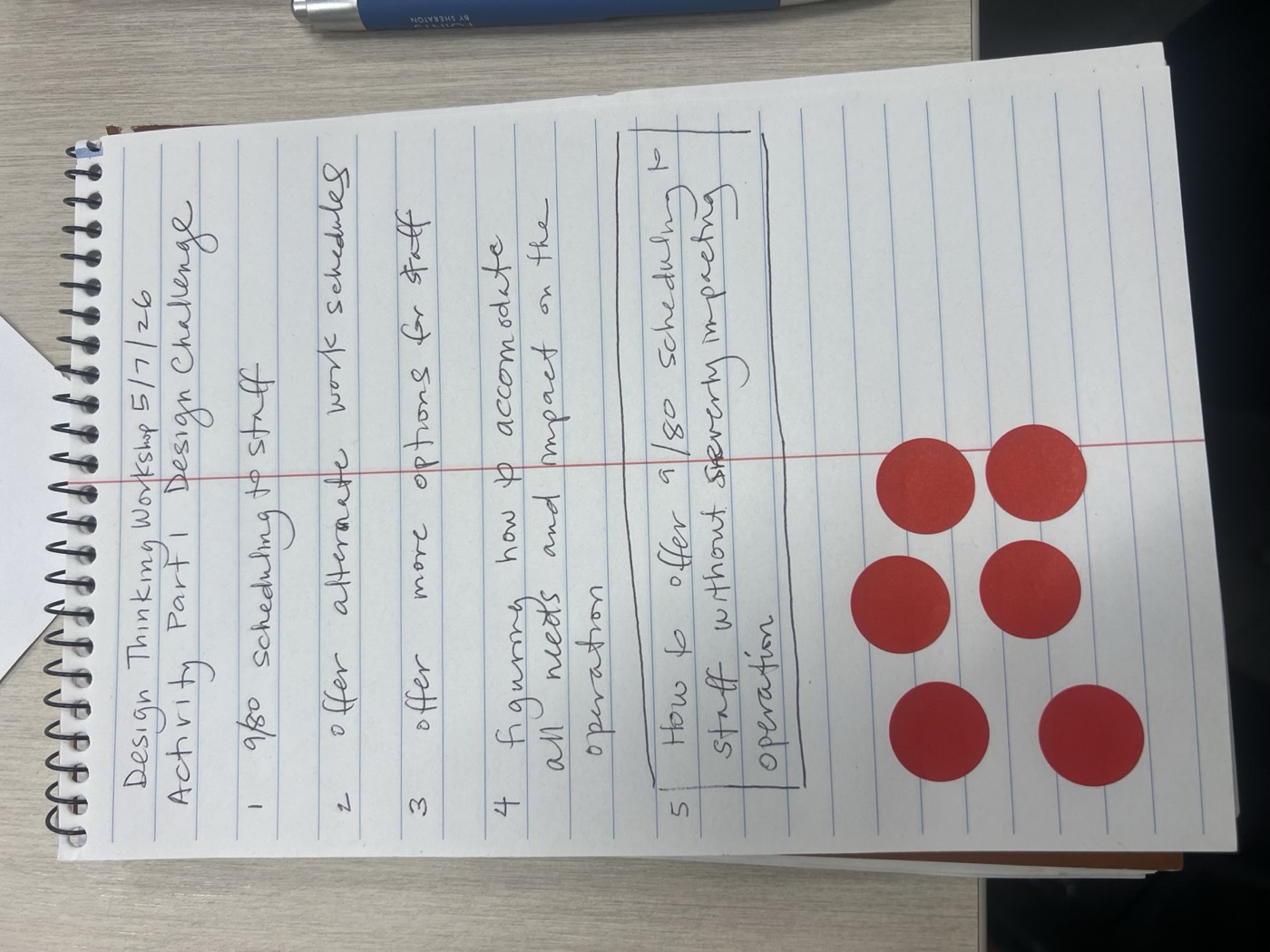
Handwritten design challenge ideas on a notepad with red voting dots
Define the challenge. A first design challenge, written as a question and voted on with dots.
A persona template in Figma showing a proto-persona and a user persona
Proto-persona to persona. The template teams used to turn their first sketch into a fuller persona.
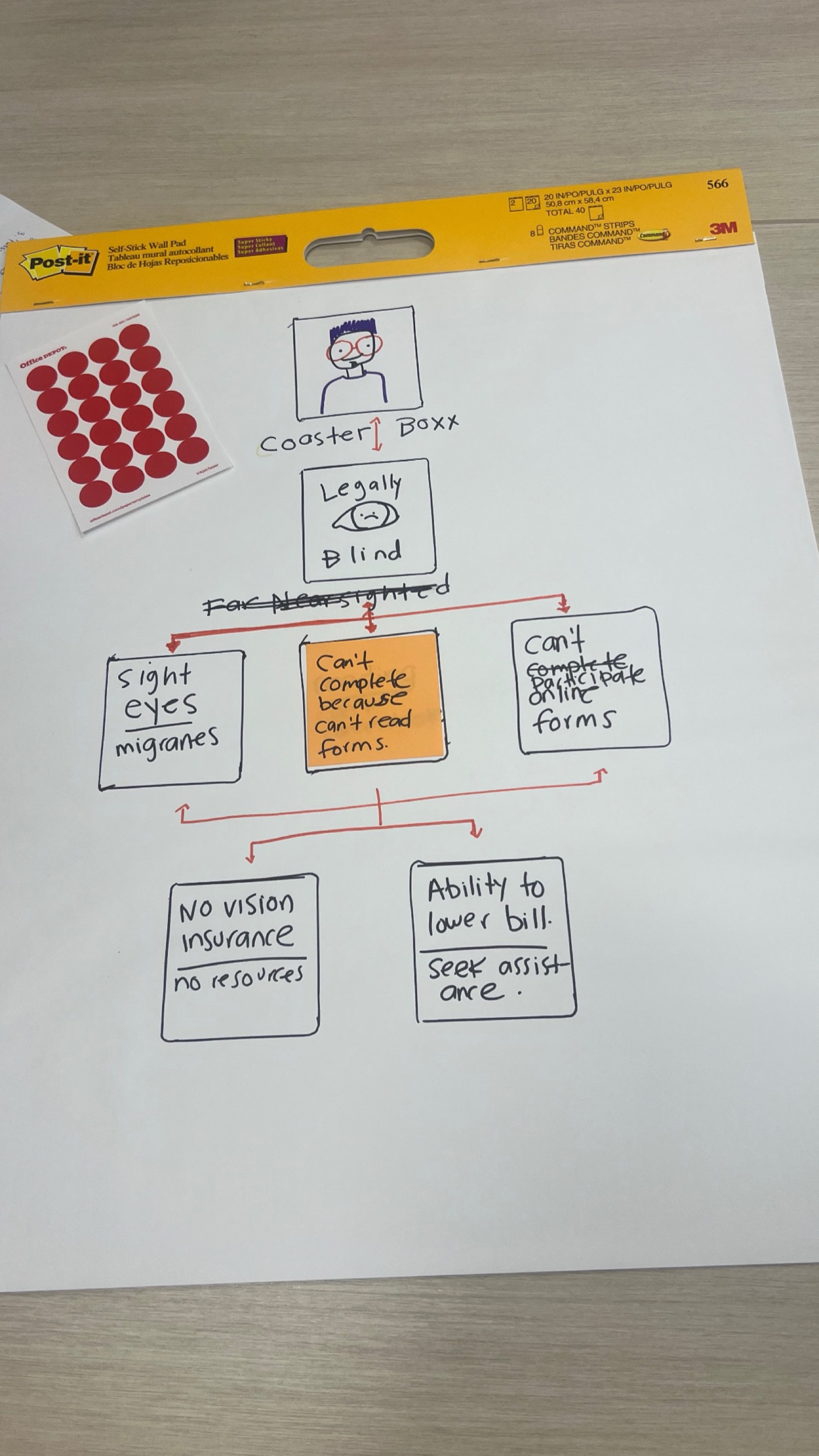
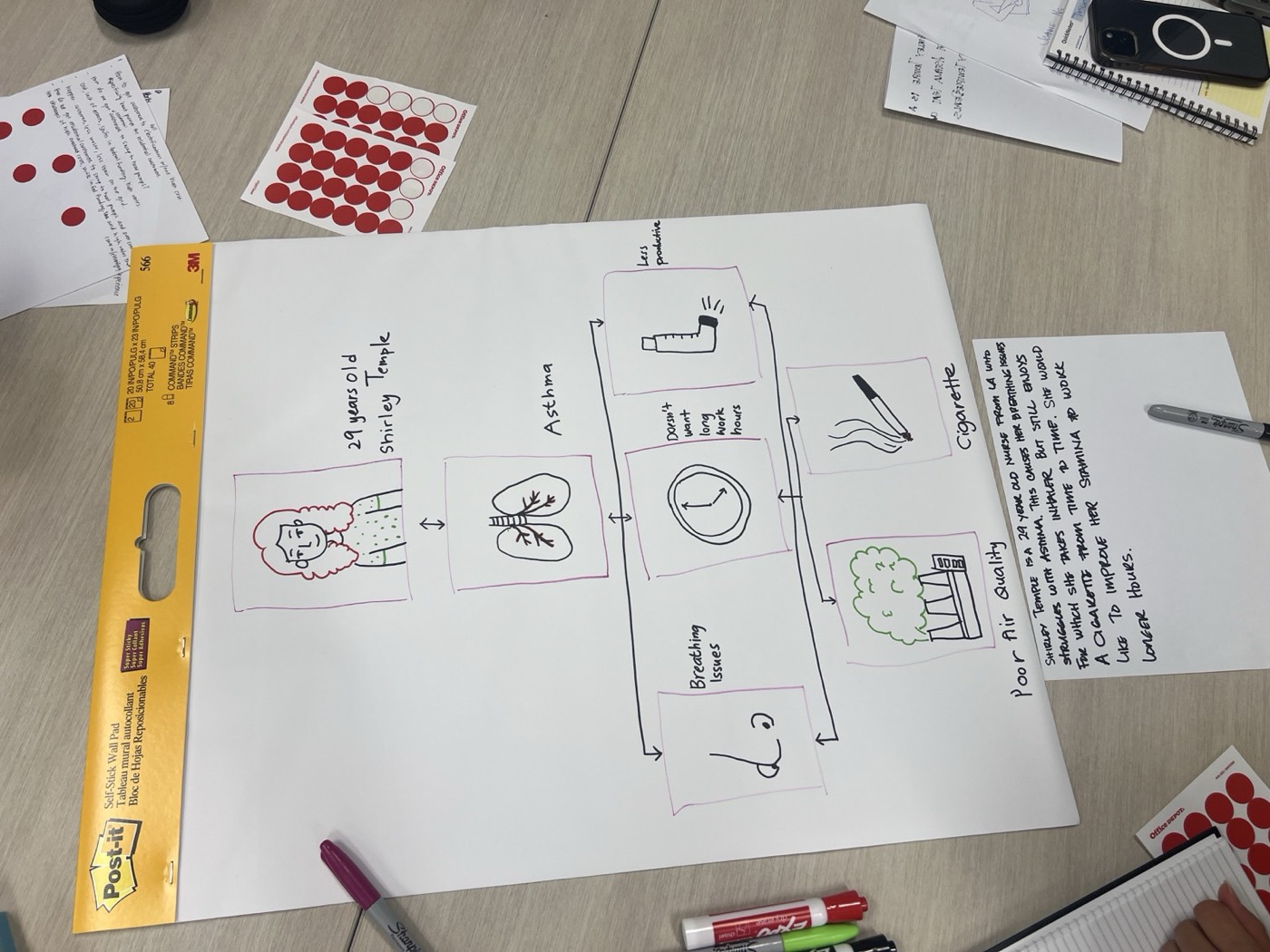
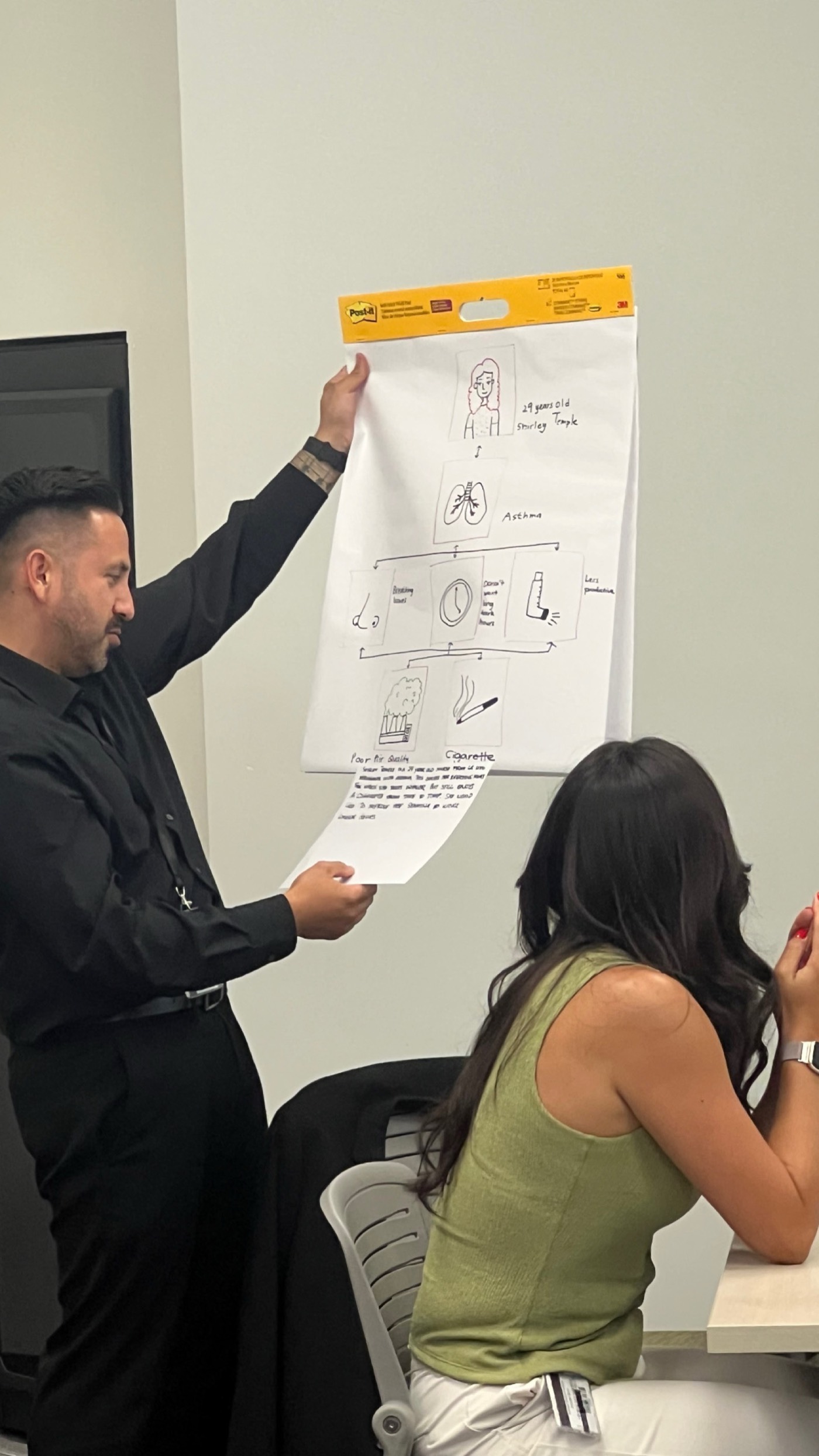
A flip chart with a drawn persona and boxes mapping their situation
Map the situation. A persona at the top, with what they see, feel and struggle with below.
A flip chart with a drawn persona and a sketched journey around a table
Draw the journey. Teams sketched the moments in a person’s day and where it breaks down.
A participant holding up a flip chart with a persona and journey sketch for the room
Share back. A participant holds up their team’s persona and journey for the room.
Two participants drawing together on a flip chart at a table
Two heads at a table. Pairs drew the person and their situation together.
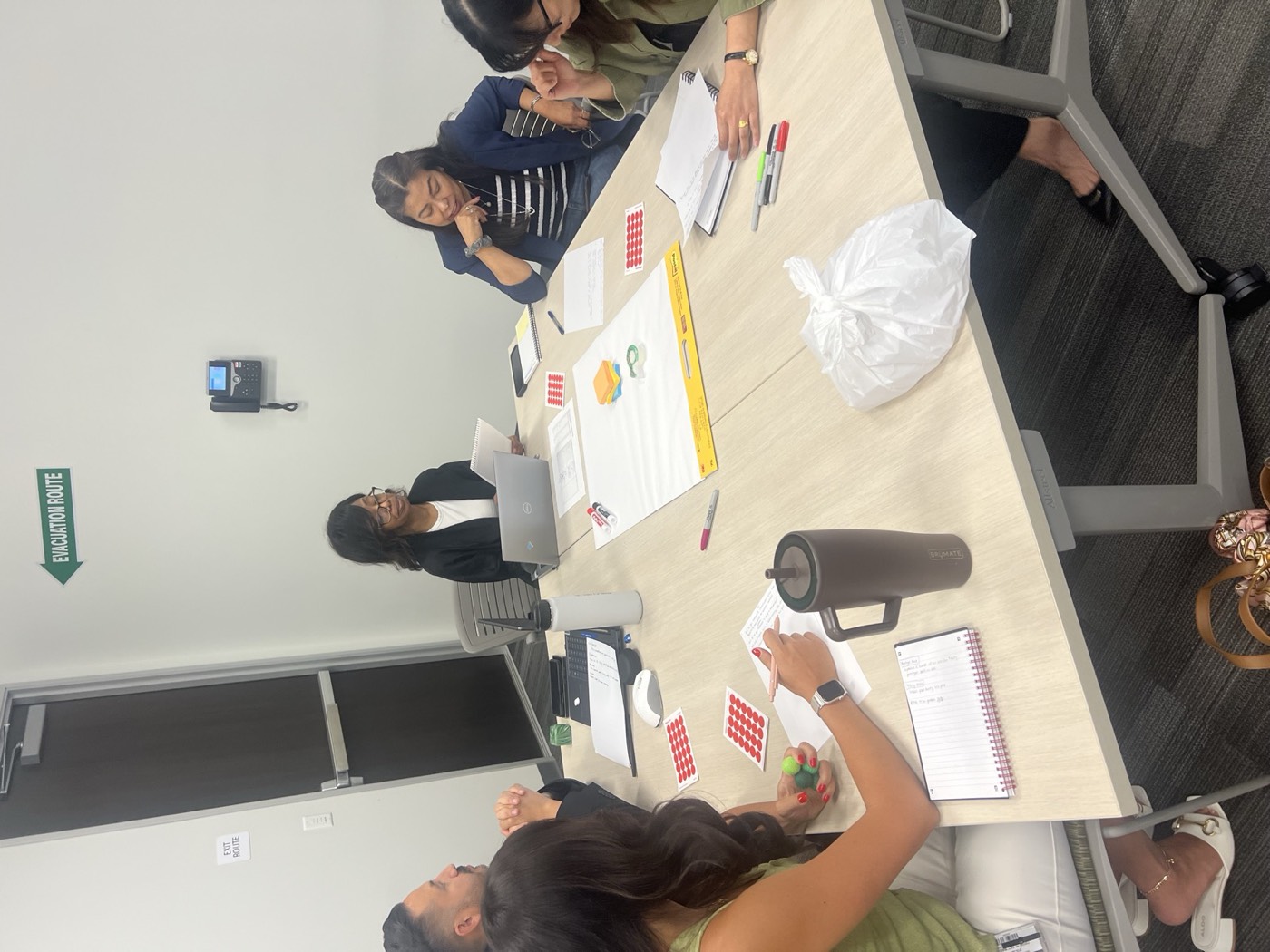
Participants working around a table with paper, markers and red dots
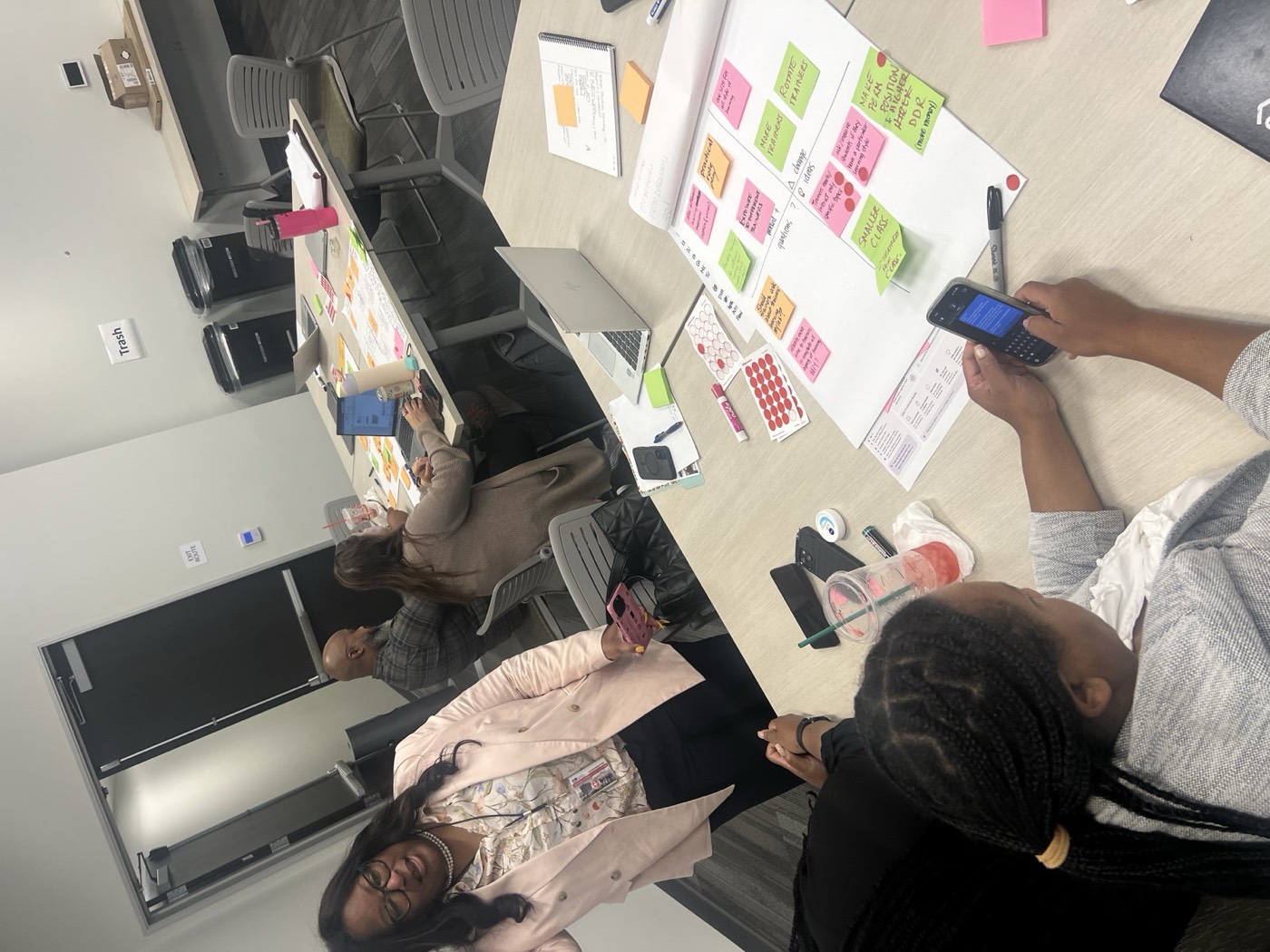
Working in tables. Small groups, markers and dots, and lots of paper.

Day 2

Ideate + Prototype + Test

Teams turned what they learned into ideas, sketched a solution, and tested it with each other.

Part 2 slides

The workshop deck for day two, in Figma.

Open in Figma


Day 2 outcomes

A sheet of blue, yellow and orange sticky notes sorted into four areas
Questions first. Teams sorted “what worked” and “what to change” before they jumped to ideas.
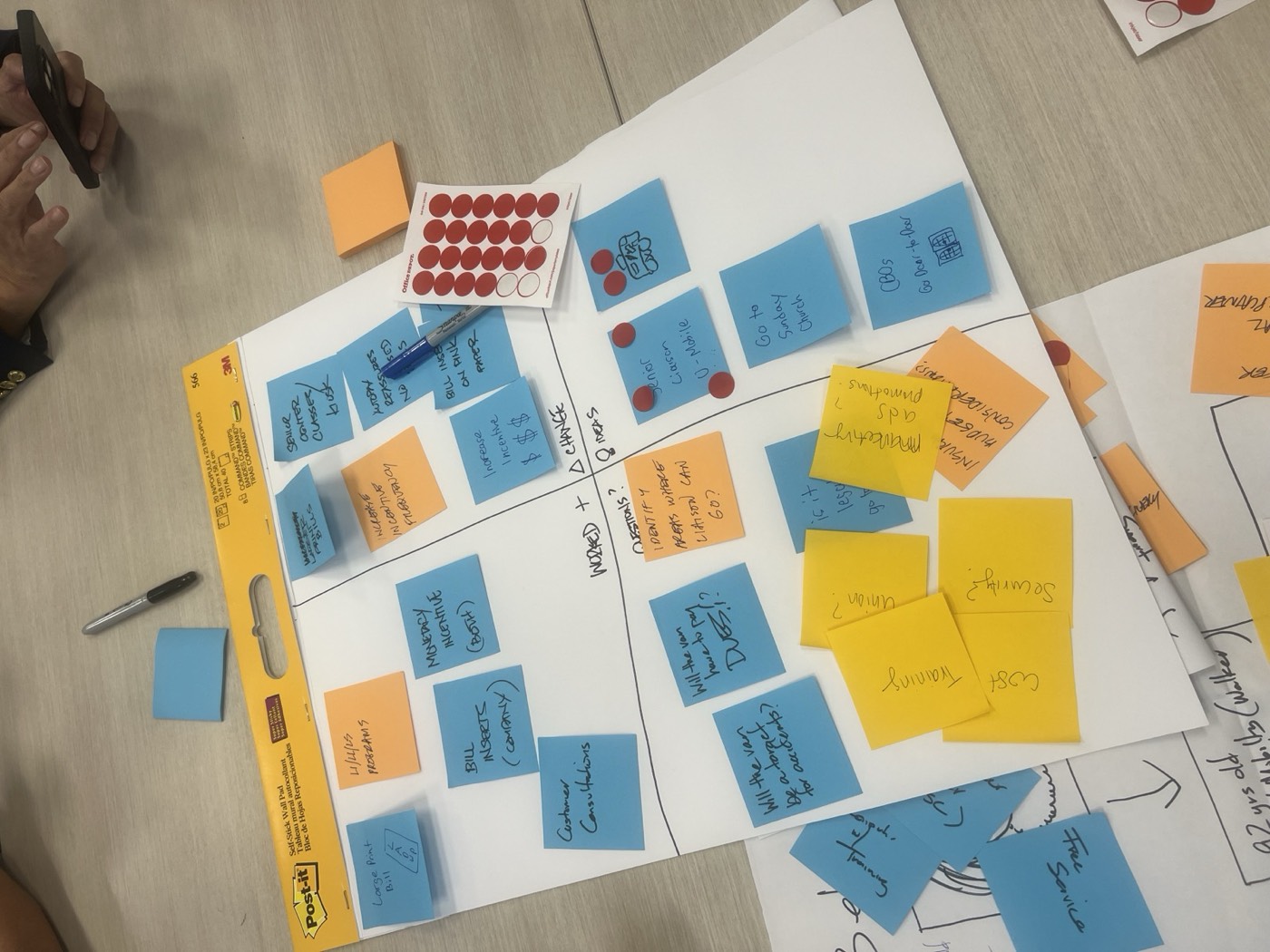
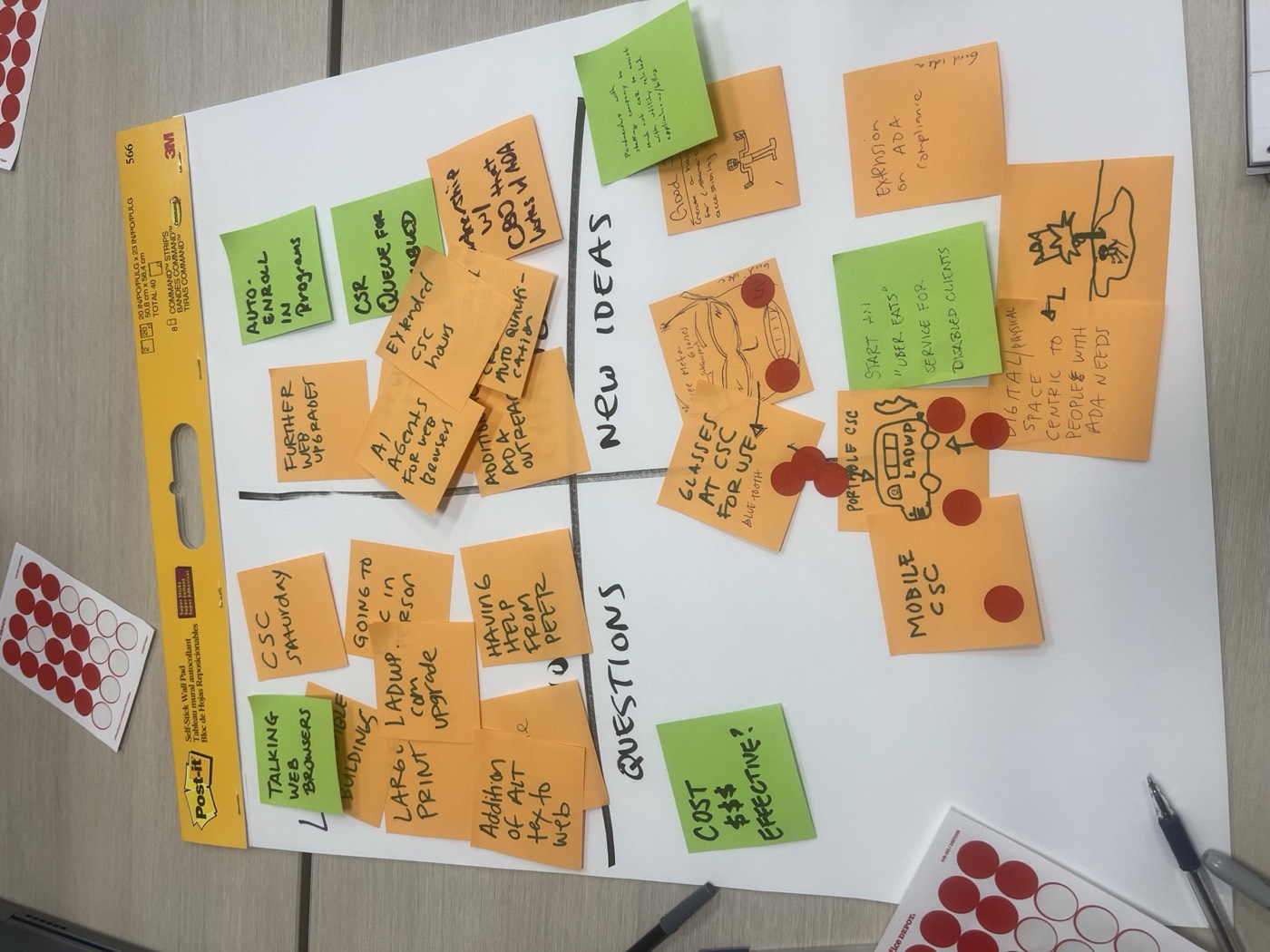
A flip chart split into questions and new ideas, covered in sticky notes and red dots
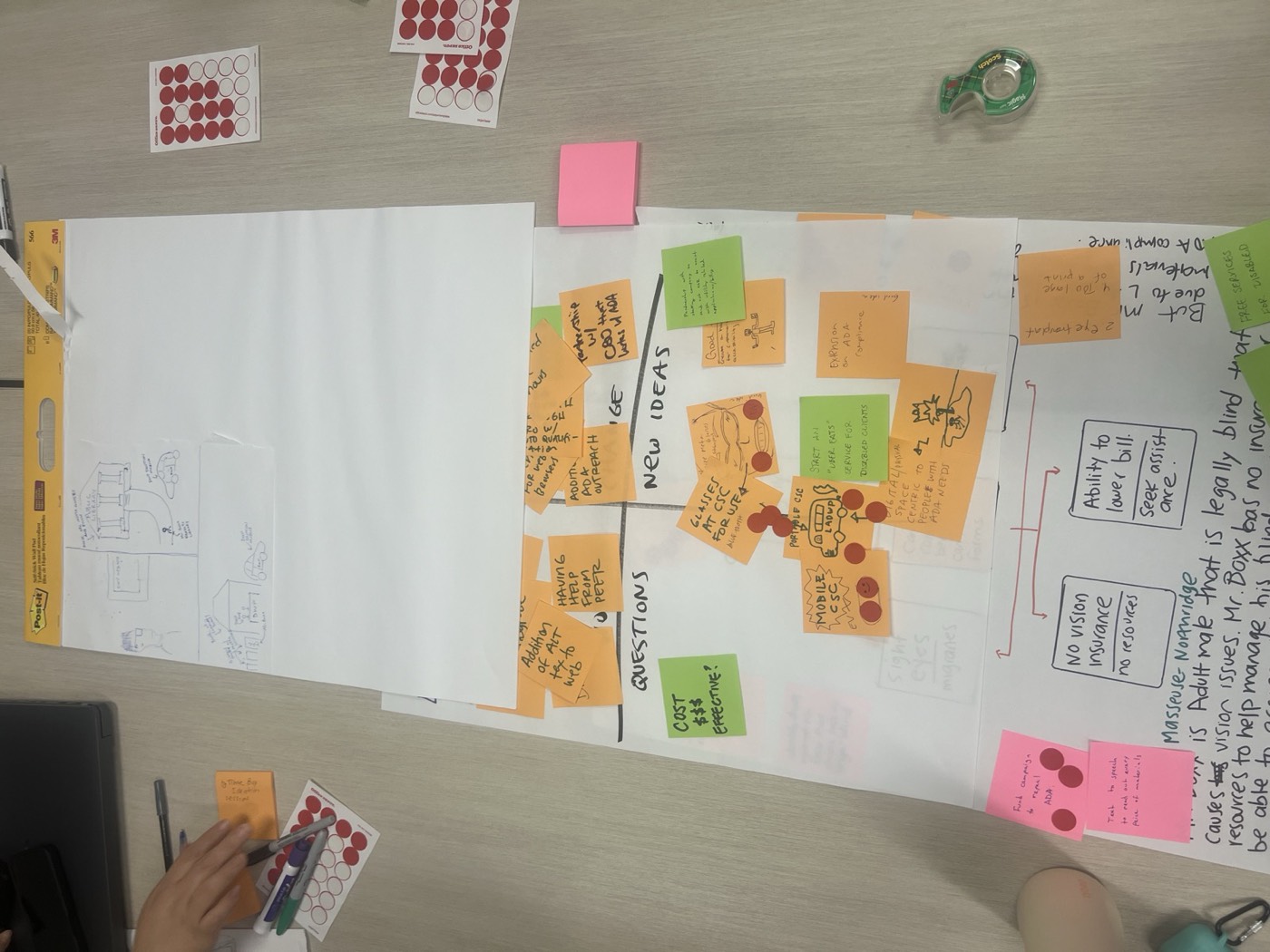
New ideas. A board of questions and new ideas, with dots marking the ones to try.
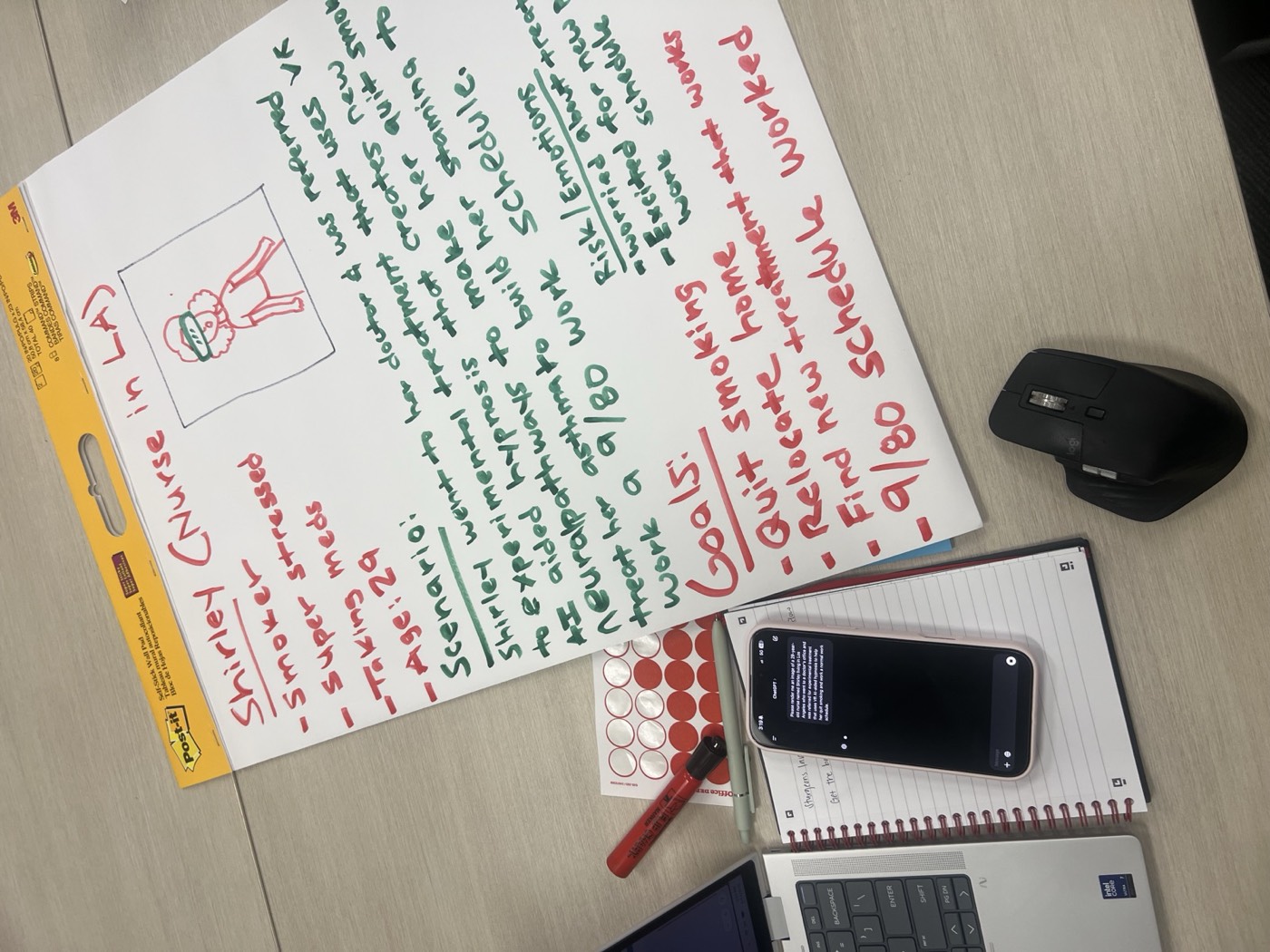
A flip chart with a hand-written scenario in green and red marker
Write the scenario. A short story about one person, their goals and what gets in the way.
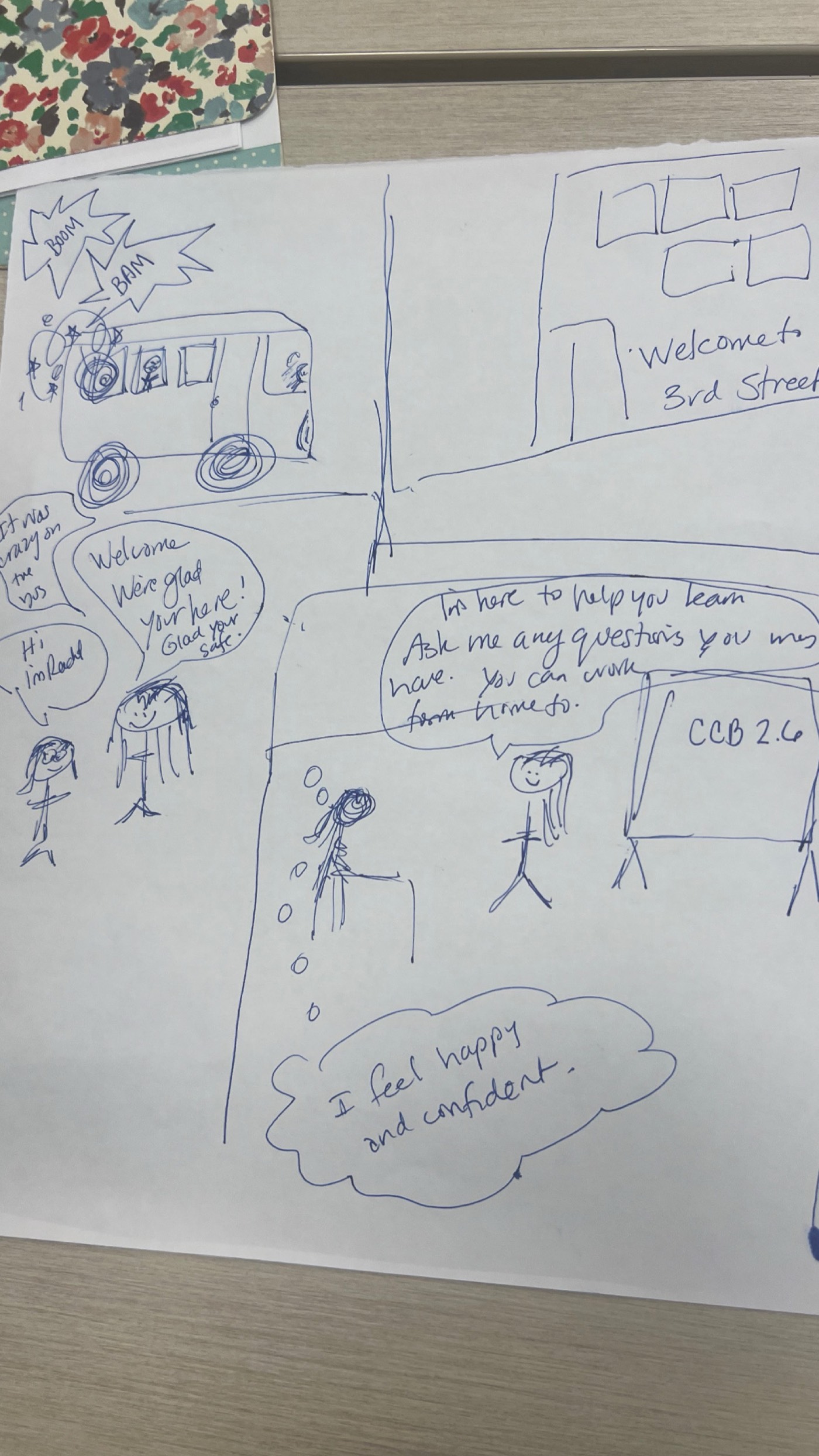
A hand-drawn storyboard of a van and people talking, on paper
Sketch the solution. A storyboard of the idea in use, drawn in minutes.
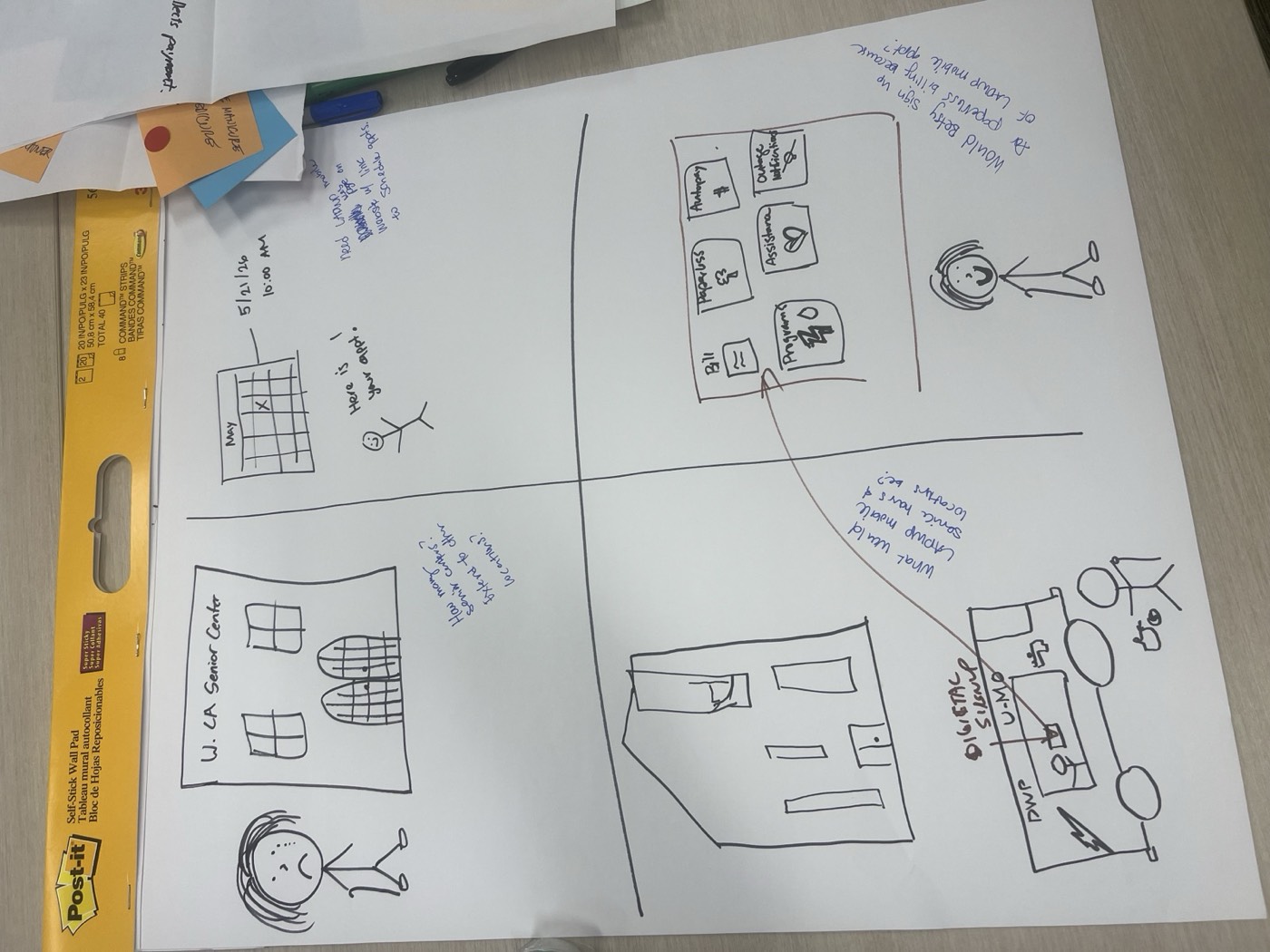
A flip chart with a four-panel storyboard drawn in marker
Four-panel storyboards. A quick, low-fidelity way to share an idea and get feedback.
A tall flip chart with a persona, orange sticky notes and written next steps
The whole idea on one page. Persona, scenario, ideas and next steps on one sheet.
Participants at a table covered in colorful sticky notes
Sticky notes everywhere. Teams filled the tables with ideas before choosing which to prototype.
Participants sketching and working on laptops around a table
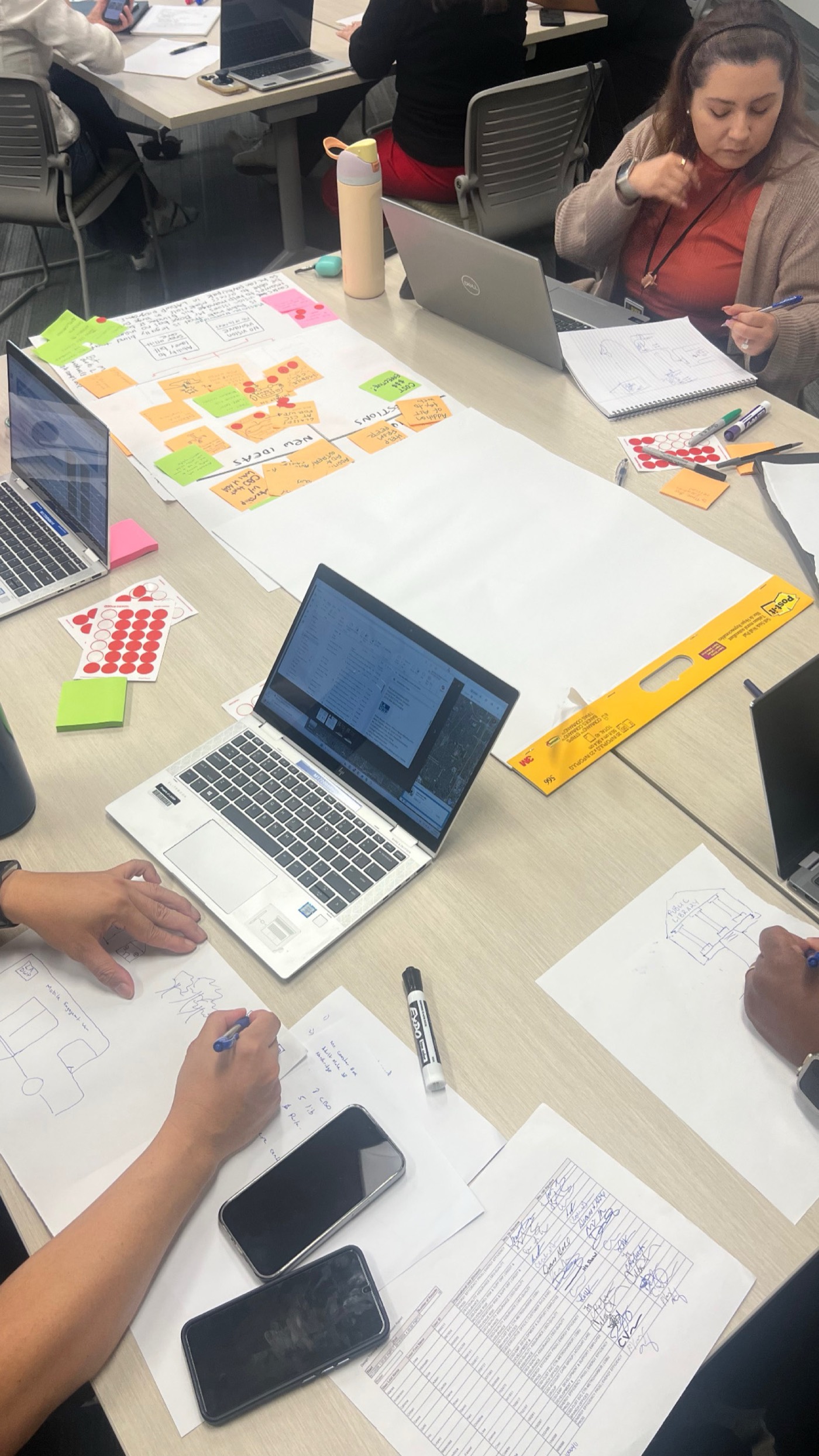
Prototype together. Sketching and laptops side by side as the ideas took shape.

What it shows

  • Teaching by doing. Short lectures, then hands-on activities, so 22 people practiced design thinking instead of just hearing about it.
  • A full design thinking arc. Empathy and define on May 7, then ideate, prototype and test on May 14, on real billing support and accessibility challenges.
  • Working with a partner. I designed the activities and lectures and led the sessions, while Enterprise U managed the client relationship and scheduling.

Want the full story?

See how I design learning that people practice.

The UX/UI bootcamp case study shows how I turned design thinking into a 24-week hands-on curriculum.

Read the UX/UI bootcamp case study See all work